
When Your Adult Child Helps Manage Your Two-State Auto Insurance
Free to compare
Why Adult Children Get Involved in Snowbird Insurance Decisions
Your adult child typically steps in when they notice a premium increase you didn't question, receive a call about a confusing renewal notice, or discover you're paying for coverage you no longer need. This happens most often after age 75, when carriers begin applying age-based rate increases that aren't clearly explained in renewal documents.
The transition from independent insurance management to collaborative decision-making isn't about diminished capacity. It's about having a second set of eyes on a system that has become deliberately opaque for older policyholders. Carriers know that senior drivers are less likely to shop around or challenge rate increases, and renewal notices are written to discourage questions.
When your child offers to help, the most valuable thing they can do is verify that your current policy actually covers your snowbird situation correctly. Most families discover gaps only after a claim is denied because the carrier wasn't notified about the second residence or the vehicle was registered in the wrong state.

The Florida 183-Day Rule Your Child Needs to Understand First
Florida law requires you to register your vehicle in Florida and obtain a Florida driver's license within 10 days of becoming a resident. You become a Florida resident when you've spent more than 183 days in the state during any 365-day period. This isn't a calendar year calculation — it's a rolling 12-month window.
Most Long Island snowbirds spending November through April in Boca Raton or Delray Beach stay under 183 days and maintain their New York registration legally. But if you extend your stay into May or arrive in October, you can cross the threshold without realizing it. Once you do, Florida considers you a resident retroactively from day 184, and your New York insurance may not cover Florida claims if the carrier discovers the discrepancy.
Your adult child should track your actual days in each state, not estimate. Phone location data, credit card transactions, and utility bills create a documentary trail that insurance adjusters and state DMV investigators use to establish residence. If you're close to 183 days, staying under matters more than saving a few weeks of heating costs up north.


How New York's Continuous Coverage Rules Affect Your Florida Winter
New York requires continuous auto insurance coverage for any vehicle with active registration, even if the vehicle sits unused in a Long Island garage for five months. Dropping coverage during your Florida winter to save money triggers an immediate registration suspension and a minimum $8 per day civil penalty from the DMV, capped at $1,500.
Your child needs to know that "seasonal" or "storage" coverage isn't a real product category in New York. You either maintain liability and comprehensive coverage or surrender your New York plates before you leave. Most snowbirds keep full New York coverage active because re-registering a vehicle after a suspension requires paying all accumulated penalties plus a $50 reinstatement fee.
If you drive your New York-registered vehicle to Florida and back each year, your New York policy must explicitly cover out-of-state use for extended periods. Most policies do, but some carriers limit consecutive out-of-state days to 90 or require notification for stays longer than 60 days. Your child should call your carrier and document the answer before you leave each fall.
What Happens When You Own Property in Both States
Owning a condo in Delray Beach and a home on Long Island doesn't automatically require dual registration or dual insurance, but it does create a residency presumption that carriers and state agencies scrutinize more carefully. Florida assumes that property ownership combined with extended presence indicates residency intent, even if you stay under 183 days.
Your adult child should verify that your New York policy lists your Florida address as a seasonal residence and that your carrier has acknowledged in writing that the vehicle will be garaged at that address for four to five months annually. Without this documentation, a claim filed from your Florida address can trigger a coverage investigation that delays or denies payment.
Some carriers charge a small premium increase for snowbird coverage because Florida's higher theft and weather risk applies while you're there. This typically adds $40 to $80 per year to your New York policy. If your carrier won't cover the arrangement or quotes a large increase, your child should shop specifically for snowbird-friendly carriers rather than accepting the first quote. Progressive, Geico, and Travelers have established snowbird programs with transparent pricing.

Get Covered in Both of Your Home States
Compare Snowbird Auto Insurance Rates
When Florida Insurance Becomes Required Instead of Optional
If you cross the 183-day threshold or file a Florida declaration of domicile for estate planning or homestead tax exemption, you must register your vehicle in Florida and obtain Florida auto insurance. Florida's minimum liability coverage is $10,000 property damage and $10,000 personal injury protection — significantly lower than New York's $25,000/$50,000 bodily injury and $10,000 property damage requirements.
Your child should understand that switching to Florida-only coverage to meet lower minimums exposes you to significant liability risk. Florida is a no-fault state with high rates of uninsured drivers — estimated at 20% in Palm Beach County. Maintaining higher liability limits and adding uninsured motorist coverage becomes more important in Florida, not less, despite the lower legal minimums.
Florida insurance for a senior driver with a clean record typically costs $110 to $180 per month for adequate coverage, compared to $95 to $150 per month for comparable New York coverage on Long Island. Your child should request quotes that maintain your current liability limits rather than accepting the state minimum, and they should verify that any new Florida policy includes personal injury protection at the $10,000 minimum required by state law.

How to Transition Insurance Responsibility Gradually
The cleanest transition gives your adult child access to your current policy information and carrier contact details without removing you from the decision loop. Most carriers allow you to add an authorized representative to your account who can request information, file claims, and discuss coverage options, but who cannot make binding changes without your verbal or written approval.
Your child should schedule a three-way call with you and your insurance agent to review your current coverage, confirm the snowbird arrangement is documented correctly, and establish their role as a point of contact for questions. This call should happen before you leave for Florida, not after a problem emerges.
If your child will be comparing rates on your behalf, they need your current declarations page, your driver's license number, your vehicle identification number, and your complete claims history for the past five years. Shopping without accurate loss history produces artificially low quotes that disappear once the carrier runs the actual report. Estimates based on available industry data; individual rates vary by driving history, vehicle, coverage selections, and location.
Common Mistakes Adult Children Make When Taking Over
The most expensive mistake is assuming that the cheapest quote solves the problem. Your child may find a Florida policy $50 per month cheaper than your current New York coverage, but if it drops your liability limits, removes rental reimbursement, or excludes coverage for trips back to New York, the savings disappear the first time you need the policy to work.
Another frequent error is canceling your New York policy the day you arrive in Florida without verifying that your new Florida policy is active and that your New York registration has been properly surrendered. A coverage gap of even one day triggers the New York DMV penalty system and creates a lapse notation that increases your rates for the next three years.
Your child should also avoid switching carriers mid-policy term unless the savings exceed $400 annually or your current carrier has refused to cover your snowbird arrangement. Early cancellation fees, loss of renewal discounts, and the administrative burden of two policy changes per year rarely justify small monthly savings.
Frequently Asked Questions
Can my adult child legally make changes to my auto insurance policy without me present?
No, unless you've granted them formal power of attorney or established them as an authorized representative with your insurance carrier. Most carriers allow you to designate a family member who can discuss your policy and request information, but binding changes like coverage adjustments, cancellations, or new policy purchases require your direct authorization. Set up authorized representative access through a three-way call with your carrier before your child begins helping with insurance decisions.
Do I need to tell my New York insurance company that I spend winters in Florida?
Yes, especially if you're driving your New York-registered vehicle to Florida and garaging it there for more than 60 consecutive days. Most carriers require notification of extended out-of-state use, and some limit coverage if you exceed 90 consecutive days without prior approval. Failing to disclose your snowbird pattern can result in claim denials if an accident occurs at your undisclosed Florida address.
What happens if I accidentally stay in Florida longer than 183 days?
You become a Florida resident under state law and must register your vehicle in Florida and obtain a Florida driver's license within 10 days of crossing the 183-day threshold. If you don't, your New York insurance may refuse to cover claims filed after that date, and both Florida and New York can impose registration and licensing penalties. Track your days carefully and plan your travel to stay under 183 days in any rolling 12-month period if you want to maintain New York residency.
Should my child switch me to a Florida policy to save money on insurance?
Only if you've legally established Florida residency by spending more than 183 days per year in the state or filing a Florida declaration of domicile. Switching to Florida insurance while maintaining New York residency and registration creates a mismatch that will void your coverage. If you do establish Florida residency, your child should compare policies that maintain your current liability limits rather than dropping to Florida's lower state minimums, because Florida's high uninsured driver rate increases your liability exposure.
Related Articles
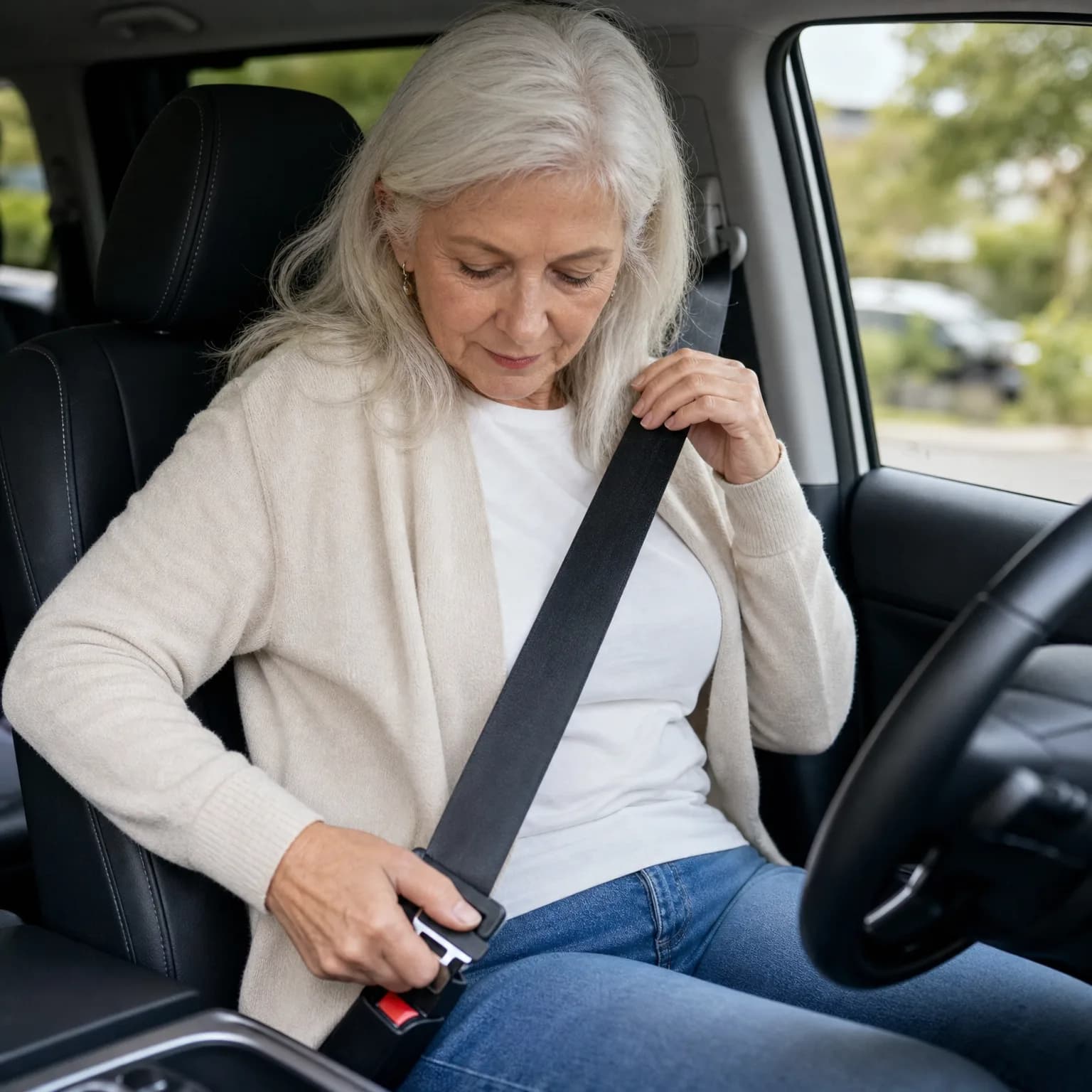
When Adult Children Take Over Snowbird Auto Insurance
4/26/2026

Adult Child Taking Over Snowbird Auto Insurance
4/26/2026

Adult Child Taking Over Snowbird Auto Insurance Decisions
4/26/2026

NYC to Sarasota FL: When Adult Child Manages Insurance
4/26/2026

Buffalo to FL: When Family Takes Over Snowbird Insurance
4/26/2026

When Your Child Manages Your Snowbird Auto Insurance
4/26/2026