
Central Jersey to The Villages FL: Timing Your Auto Policy Switch
Free to compare
Why the Standard Move Sequence Creates a Coverage Gap
New Jersey's DMV requires proof of continuous insurance until your registration is formally surrendered, not just until you move. Florida issues new registration immediately when you establish residency, but New Jersey takes 7–14 business days to process an out-of-state transfer notification. If you cancel your New Jersey policy the day you register in Florida, New Jersey's system flags a lapse between your cancellation date and their processing date.
That lapse appears on your insurance record even though you had active Florida coverage the entire time. Carriers in both states treat lapses as high-risk indicators. A 10-day gap can increase your Florida premium 15–25% for the next three years, adding $300–$600 annually to your cost.
The correct sequence: maintain your New Jersey policy until New Jersey DMV confirms your out-of-state transfer is complete, then request cancellation effective that confirmation date. Your Florida policy should start before or on your Florida registration date. You'll pay for 1–2 weeks of overlapping coverage, typically $40–$80, but you avoid the lapse flag entirely.

When Florida Residency Legally Starts for Insurance Purposes
Florida law defines residency for insurance as the point you establish a permanent residence and register to vote, apply for a homestead exemption, or enroll in Florida services. Spending 183 days per year in Florida doesn't automatically trigger mandatory registration. Buying property in The Villages doesn't trigger it. Registering your vehicle does.
Once you register a vehicle in Florida, you have 30 days to obtain a Florida driver license under Florida Statute 322.04. Your insurance policy must show a Florida address as the primary garaging location before registration is issued. Most Sumter County tax collectors (The Villages spans Sumter, Lake, and Marion counties) require proof of Florida insurance at the registration counter.
If you maintain your New Jersey residence as primary and your Florida property as seasonal, you can keep New Jersey registration and insurance indefinitely. But if you claim Florida residency for tax purposes, register to vote in Florida, or file for homestead exemption, you must register and insure in Florida within 30 days of establishing that residency. The tax benefit and insurance requirement are legally linked.


How Carriers Handle Mid-Policy State Transfers
Most national carriers write policies in both New Jersey and Florida, but they treat mid-term transfers differently. State Farm, Allstate, and Travelers typically allow you to transfer an existing policy from New Jersey to Florida without rewriting, but your rate recalculates based on Florida territory, your Florida credit score (Florida permits credit-based pricing), and Florida coverage requirements.
Geico and Progressive usually require a new Florida policy rather than a transfer. Your New Jersey policy cancels, and Florida issues as a new effective date. This creates the lapse risk described above unless you coordinate cancellation timing precisely. If you've been with the same carrier for 10+ years in New Jersey, a forced rewrite can cost you longevity discounts worth 10–20%.
Progressive and Geico often deliver lower rates in Florida for drivers over 65, but the rewrite and lapse risk can erase that advantage. State Farm and Allstate tend to preserve your policy history and discount tenure through a transfer, but their Florida rates run 10–15% higher than their New Jersey rates for the same coverage in The Villages ZIP codes (32159, 32162, 32163). Request a Florida quote from your current carrier 45–60 days before your move, then compare it against a new-carrier quote that includes your full claims and violation history from New Jersey.
What Happens to Your New Jersey Registration After You Move
New Jersey requires you to surrender your registration and plates within 60 days of establishing out-of-state residency. You can mail plates to NJ MVC, PO Box 017, Trenton, NJ 08666, or surrender them in person at any MVC agency. Include a note with your Florida address, New Jersey plate number, and the date you registered in Florida.
If you don't surrender registration formally, New Jersey assumes the vehicle is still garaged in New Jersey and your insurance is still required. Missing this step can trigger uninsured motorist violations, registration suspension, and MVC restoration fees of $100 plus a $25 per-day fine capped at $500 under N.J.S.A. 39:6B-2. Those violations follow you to Florida and appear when you apply for Florida registration.
Request a surrender confirmation receipt from New Jersey MVC. That receipt is your proof of the exact date your New Jersey insurance obligation ended. Send a copy to your New Jersey insurer with your cancellation request, referencing the MVC confirmation date as your requested cancellation effective date. This closes the loop and ensures no lapse appears between your last day of New Jersey coverage and your first day of Florida coverage.

Get Covered in Both of Your Home States
Compare Snowbird Auto Insurance Rates
Coverage Differences You'll Notice in Florida
Florida is a no-fault state requiring Personal Injury Protection (PIP) coverage of at least $10,000. New Jersey offers a choice between Standard and Basic policies, with Basic policies excluding PIP in favor of lower premiums. If you carried New Jersey Basic, your Florida policy will cost $150–$250 more annually due to mandatory PIP, even if your liability limits stay the same.
Florida does not require bodily injury liability coverage, though nearly every lender and leasing company does. New Jersey mandates minimum bodily injury limits of 15/30. If you carried only New Jersey's minimum liability, your Florida policy can legally drop bodily injury entirely and meet state requirements with PIP and property damage only. That's almost never advisable for a driver with assets to protect, but it explains why some Florida quotes appear lower than expected.
Uninsured motorist coverage is optional in Florida but required in New Jersey unless you reject it in writing. Roughly 20% of Florida drivers carry no bodily injury coverage, compared to 3% in New Jersey. If you don't explicitly add uninsured motorist coverage to your Florida policy, you're driving without it. Request UM/UIM limits that match your liability limits. In The Villages, where golf cart accidents involving uninsured operators are common, this coverage is particularly relevant.
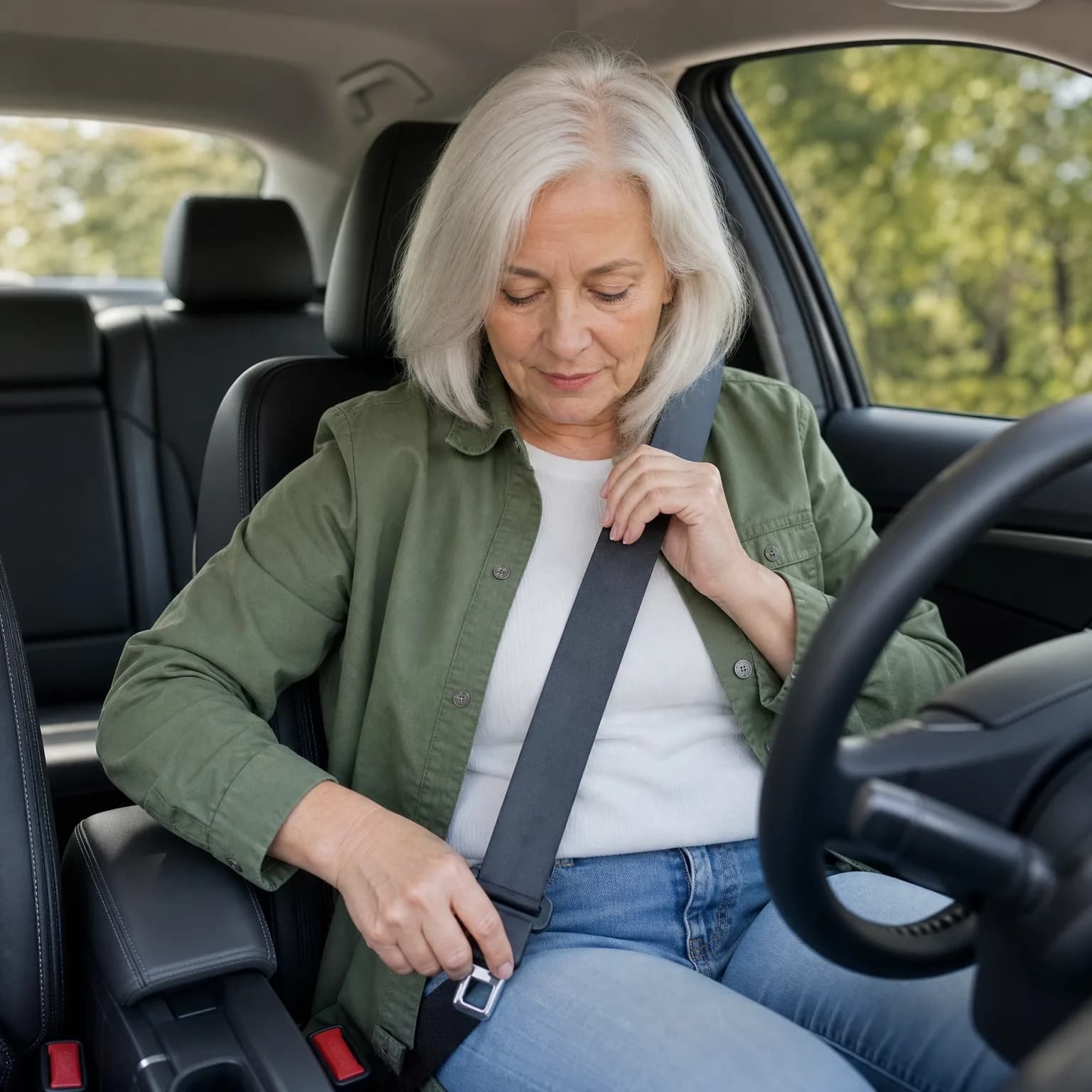
How to Time the Policy Switch Without Overlap Waste
Start your Florida policy effective the date you take possession of your Florida property or the date you register your vehicle in Florida, whichever comes first. Request a Florida quote 60 days before that date. Bind the Florida policy 7–10 days before your registration appointment to ensure the insurance card is available when the tax collector requests it.
Keep your New Jersey policy active until you receive written confirmation from New Jersey MVC that your out-of-state registration transfer is complete. Mail your plates with tracking the same day you complete Florida registration. New Jersey processes surrenders in 7–14 business days. Once you have the MVC confirmation, call your New Jersey insurer and request cancellation effective the confirmation date, not the call date.
You'll pay for 1–2 weeks of dual coverage. A typical New Jersey policy costs $140–$180/month for a driver over 65 with a clean record, pro-rated to $35–$50 for 10 days. That overlap cost is smaller than the $300–$600 annual increase a lapse penalty would trigger. Most carriers refund unused premium within 14 days of cancellation, so your final New Jersey billing adjusts for the exact days covered.
Should You Keep Your New Jersey Policy and Add Florida as a Seasonal Address
If you spend fewer than 183 days per year in Florida, maintain your New Jersey home as your legal domicile, and don't register to vote or file for homestead in Florida, you can keep New Jersey as your primary insurance state. Notify your carrier that you'll be garaging the vehicle in Florida seasonally and request that The Villages ZIP code be added as a secondary location.
Most carriers adjust your rate based on the percentage of time you spend in each state. If you're in Florida November through March (5 months), your rate recalculates as a weighted average of New Jersey and Florida territory rates. Florida's higher uninsured motorist frequency and New Jersey's higher injury costs mean this approach rarely saves money unless your New Jersey rate is unusually low due to longevity discounts or a bundled home policy.
This approach only works if you don't register the vehicle in Florida. The moment you obtain Florida plates, Florida law requires a Florida policy with a Florida address as the primary garaging location. Keeping a New Jersey policy after you register in Florida is insurance fraud and grounds for claim denial. If you want to maintain legal New Jersey residency for tax reasons, you must keep New Jersey registration, which means you'll pay New Jersey's higher registration fees and New Jersey's inspection requirements every two years even though the vehicle is in Florida most of the year.
Frequently Asked Questions
Can I keep my New Jersey insurance after I register my car in Florida?
No. Once you register a vehicle in Florida, Florida law requires a Florida insurance policy listing a Florida address as the primary garaging location. Keeping a New Jersey policy after Florida registration is insurance fraud and will result in claim denial. You can maintain New Jersey residency for tax purposes, but if the vehicle has Florida plates, it must have Florida insurance.
Will my car insurance rate go up or down when I move from New Jersey to Florida?
Most drivers over 65 moving to The Villages see rates decrease 10–20% compared to Central Jersey, primarily due to lower liability limits and Florida's competitive senior market. However, Florida requires PIP coverage that New Jersey Basic policies exclude, adding $150–$250 annually. If you carried New Jersey's minimum liability, your total premium will likely drop. If you carried higher limits or had longevity discounts with your New Jersey carrier, the savings may be smaller or reversed.
How long do I have to switch my car insurance after moving to Florida?
Florida law requires you to register your vehicle within 30 days of establishing residency. Your Florida insurance must be active before registration is issued, so you have effectively 30 days to obtain a Florida policy once you establish legal residency. However, you should maintain your New Jersey policy until New Jersey DMV confirms your registration surrender to avoid a lapse flag on your record.
Do I need to notify my New Jersey insurance company before I move to Florida?
Yes. Call your carrier 60 days before your move to request a Florida quote and confirm whether they can transfer your policy or if they'll require a rewrite. Notify them of your planned Florida registration date so they can coordinate cancellation timing with New Jersey's surrender confirmation. Failing to notify your carrier before the move can result in claims being denied if an accident occurs during the transition period.
Related Articles

Moving to The Villages FL: Auto Insurance Steps
4/26/2026

NJ to Boca Raton: When to Switch Auto Insurance
4/26/2026

When NOT to Move Auto Insurance from NJ to Florida
4/26/2026

NJ-FL Snowbird Insurance Gap Risk During the Move
5/19/2026

NJ to FL Move: Auto Insurance Steps for Snowbirds
4/26/2026

NJ to Cape Coral FL: When to Switch Auto Insurance
4/26/2026