
Cleveland to The Villages FL: Auto Insurance at 75, 80, and 85
Free to compare
When Does Florida Require You to Register Your Vehicle?
Florida requires you to register your vehicle within 10 days of accepting employment in the state or enrolling children in public school. If neither applies, the trigger is 183 days of residency in a calendar year — calculated cumulatively, not per visit.
Most snowbirds spending November through April in The Villages cross the 183-day threshold without realizing it. Six months is 182 days. If you arrive November 1 and leave April 30, you've been in Florida for 181 days — just under the line. But if you arrive October 28 or leave May 3, you've triggered the registration requirement.
The consequence: Ohio considers your vehicle unregistered the moment Florida law required registration. Your Ohio policy doesn't automatically void, but if you file a claim while technically required to be registered in Florida, your carrier can deny coverage retroactively. Most carriers don't notify you when this happens — they discover it during claims investigation.

How Snowbird Insurance Actually Works Across Two States
You register and insure your vehicle in one state — your state of legal domicile. For most Ohio snowbirds, that remains Ohio as long as you maintain your Ohio driver's license, vote in Ohio, and file Ohio state taxes. Your auto insurance follows the vehicle's registration, not where you physically park it.
Florida does not require separate insurance if you're a non-resident driving a properly registered and insured out-of-state vehicle. Ohio's minimum liability limits are 25/50/25. Florida's minimums are 10/20/10 for property damage and personal injury protection. Because Ohio's liability limits exceed Florida's, an Ohio-registered vehicle driven in Florida by an Ohio resident meets Florida's insurance requirements.
The gap appears when carriers restrict coverage geography. Some carriers write policies that exclude Florida entirely during winter months for Ohio-registered vehicles. Others add Florida as a rated location, which increases your premium 15–40% depending on your age and The Villages zip code. A third group — typically regional carriers — simply won't insure a vehicle that spends more than 90 consecutive days outside Ohio.
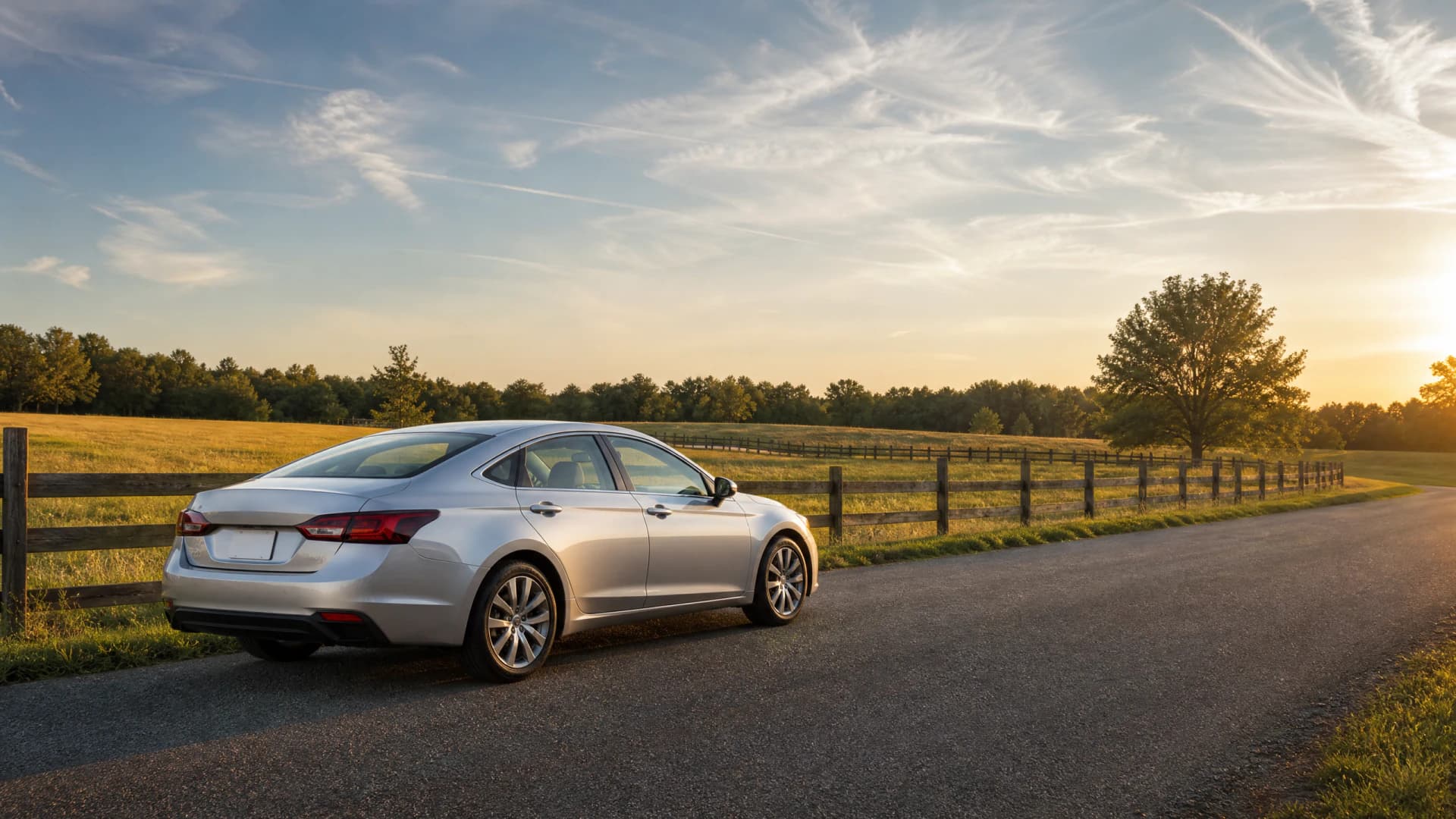

What Happens to Your Rates When You Add Florida as a Winter Location
Carriers that allow multi-state coverage rate your policy using a blended model: your garaging address for the majority of the year sets the base rate, and the secondary state adds a surcharge. For a 75-year-old driver with a clean record, adding The Villages as a winter location to an Ohio policy typically increases annual premiums by $180–$420.
That increase reflects Florida's higher uninsured motorist rate (20% statewide, compared to Ohio's 12%) and higher theft rates in high-density senior communities. The Villages specifically has lower collision claim frequency than Florida's state average, but comprehensive claims — windshield damage, animal strikes, theft — run 18–25% higher than comparable Ohio communities.
At 80, the same driver sees that Florida surcharge increase to $280–$520 annually. At 85, it climbs to $350–$680. The age-based increase isn't linear — it accelerates after 80 because Florida's personal injury protection claim costs for drivers over 80 are 30% higher than for drivers 70–79, and carriers price that risk into the multi-state surcharge.
Which Carriers Actually Write Policies for Ohio-Florida Snowbirds
State Farm, Nationwide, and Progressive write multi-state policies for Ohio residents wintering in Florida without requiring separate Florida registration. All three rate the policy using Ohio as the primary garaging location and add a seasonal surcharge for the Florida months. Erie and Auto-Owners — both strong in Ohio — restrict Florida coverage to 90 consecutive days, which eliminates them for most snowbirds spending November through April in The Villages.
GEICO writes the policy but requires you to list both addresses and calculate the percentage of time at each location. If Florida exceeds 50% of the year, they rerate the policy as a Florida-primary vehicle, which triggers Florida's higher base rates and typically increases premiums 35–50% compared to an Ohio-primary policy with a Florida surcharge.
USAA, if you're eligible, writes true multi-state coverage without a hard day limit and applies the lowest surcharge of any national carrier for Florida winter locations. For a 75-year-old with a clean record, USAA's Florida surcharge averages $140–$220 annually. For an 85-year-old, it climbs to $240–$380.

Get Covered in Both of Your Home States
Compare Snowbird Auto Insurance Rates
How to Maintain Continuous Coverage Without Paying for Two Policies
You maintain one policy, registered in your state of legal domicile, and notify your carrier of your seasonal location. Under current multi-state policy structures, you do not need separate Ohio and Florida policies unless you establish legal residency in Florida — which requires changing your driver's license, voter registration, and state tax filing, not just spending six months there.
Call your carrier before your first winter in Florida and ask three questions: Does my policy cover my vehicle in Florida for the full winter? Do you add a surcharge for listing Florida as a seasonal location? Is there a consecutive-day limit on out-of-state coverage? If the answer to question three is yes and the limit is under 120 days, you need a different carrier.
Some snowbirds try to avoid the Florida surcharge by not reporting the winter location. This creates a coverage gap. If you're in an at-fault accident in The Villages and your carrier discovers during investigation that you spend six months per year in Florida but listed Ohio as your only garaging location, they can deny the claim for material misrepresentation. The savings on the surcharge — $180–$680 per year — disappears the moment you need coverage most.

What Changes at 80 and 85 for Snowbird Drivers
At 80, most carriers require policy review or re-underwriting. This doesn't mean automatic cancellation, but it does mean your rate is recalculated using your current age bracket, claims history, and garaging locations. If you've been with the same carrier since 70 and added Florida as a winter location at 75, your rate at 80 reflects both the age increase and the cumulative claims experience for Ohio-Florida snowbirds in your age group.
For drivers 80–84 with no at-fault accidents in the prior three years, average monthly premiums for multi-state coverage run $95–$160 in Ohio with a Florida winter location. At 85, that climbs to $110–$190. The increase isn't just age — it's the carrier's actuarial data showing that drivers 85+ filing claims in Florida have higher injury severity and longer claims duration than the same drivers filing claims in Ohio.
Some carriers cap new multi-state policies at age 82 or 84, meaning if you try to add Florida as a winter location for the first time at 83, they'll decline the change and offer you an Ohio-only policy with a 90-day out-of-state limit. If you're planning to become a snowbird after 80, establish the Florida location on your policy before your 80th birthday.
How to Handle the Transition If You Decide to Become a Florida Resident
If you sell your Ohio home, change your driver's license to Florida, and establish legal Florida residency, you must register your vehicle in Florida within 10 days of obtaining your Florida license. At that point, your Ohio policy ends and you need a Florida-primary policy.
Florida requires personal injury protection coverage, which Ohio does not. PIP adds $40–$80 per month to your premium depending on your age and county. For a 75-year-old in Sumter County (The Villages), a Florida policy with state minimum liability and required PIP runs $85–$140 per month. For an 80-year-old, that climbs to $110–$175. For an 85-year-old, expect $140–$220.
The rate difference between maintaining Ohio residency with a Florida surcharge versus switching to full Florida residency is typically 20–35% higher in Florida. A snowbird paying $125/month on an Ohio policy with a Florida winter location would pay $155–$180/month on a Florida-primary policy at the same age and coverage level. That gap widens after 80.
Frequently Asked Questions
Can I keep my Ohio license and registration if I spend six months in Florida?
Yes, as long as you don't accept Florida employment or enroll dependents in Florida public schools. Spending up to 182 days per year in Florida does not automatically require you to change your residency, license, or registration if Ohio remains your legal domicile for tax and voting purposes.
Will my Ohio auto insurance cover me while I'm in Florida for the winter?
Most carriers cover out-of-state driving, but some restrict Florida coverage to 90 consecutive days or exclude Florida entirely. Call your carrier before your first winter trip and confirm there's no day limit on Florida coverage and no geographic exclusion for your winter location.
Do I need to buy separate car insurance in Florida if I already have Ohio insurance?
No, if you maintain Ohio residency and your Ohio policy covers your vehicle in Florida without a day limit. You maintain one policy in your state of legal domicile. Separate Florida insurance is only required if you establish Florida residency and register your vehicle there.
How much does car insurance increase when you add Florida as a winter location?
For a 75-year-old Ohio driver with a clean record, adding The Villages as a seasonal location increases annual premiums by $180–$420. At 85, that surcharge climbs to $350–$680, reflecting Florida's higher uninsured motorist and comprehensive claim rates.
What happens if I don't tell my insurance company I spend winters in Florida?
If you're in an at-fault accident in Florida and your carrier discovers you spend six months per year there but didn't report it, they can deny the claim for material misrepresentation. The location you list on your policy must reflect where you actually garage your vehicle.
Related Articles
Cleveland to The Villages FL: Snowbird Auto Coverage Guide
4/26/2026
Keep 2 Cars or 1? Cincinnati to The Villages Snowbird
4/26/2026

Columbus to The Villages FL: Insurance at 75, 80, 85
4/26/2026

Split vs Full FL Residency: 5 Factors for Snowbirds
4/26/2026

Cleveland to The Villages: Auto Insurance for Snowbirds
4/26/2026

Cincinnati to The Villages: When to Switch Auto Insurance
4/26/2026