
One Policy or Two: The South Carolina Snowbird Insurance Decision
Free to compare
When Does South Carolina Require a Second Policy?
South Carolina law ties your auto insurance policy to where your vehicle is physically garaged for more than 183 days in a calendar year. If your car remains in Florida for seven months while you winter in Fort Myers, you've crossed the threshold that requires a Florida-registered policy — even if you still own property in Charleston and consider South Carolina your primary residence. The state you register in must match the state where the vehicle is principally garaged, and your insurance policy must be written for that state's address.
The confusion happens because property ownership and vehicle registration follow different rules. You can own homes in both states without issue. But your vehicle can only be registered in one state at a time, and that registration must reflect where the car actually sits for the majority of the year. South Carolina requires liability minimums of 25/50/25 — $25,000 per person for bodily injury, $50,000 per incident, and $25,000 for property damage. If you register in Florida instead, you're subject to Florida's 10/20/10 minimums and its no-fault PIP requirements.
Most snowbirds discover this rule only after filing a claim. If your policy lists a South Carolina address but your vehicle has been garaged in Florida for eight months, the carrier can deny the claim on the basis of material misrepresentation of garaging location. That denial isn't negotiable, and it applies even if you've paid every premium on time for decades.

How One Policy Can Cover Both States Legally
A single policy can cover you in both states if your vehicle remains garaged in South Carolina for more than six months each year and you notify your carrier of the seasonal travel pattern. Most carriers allow temporary relocation coverage for up to six consecutive months without requiring a policy change. This means your South Carolina policy remains active while you winter in Florida, Arizona, or Texas — as long as your vehicle returns to South Carolina and is garaged there for at least 183 days before the calendar year ends.
The carrier needs to know your winter address even if the policy remains South Carolina-based. Some insurers adjust your rate slightly to account for the higher risk profile of your winter location. Florida's higher uninsured motorist rate and theft exposure can increase your premium by 5–15% even though your policy remains registered in South Carolina. That adjustment is legal and standard — the carrier is pricing for the actual risk your vehicle faces during those months, not just your registration state.
This arrangement works best for snowbirds who maintain a consistent pattern: same winter destination, same duration, return to South Carolina by early spring. If your travel dates shift unpredictably or you extend your winter stay past six months, the one-policy model breaks down and you risk a coverage gap.

Why Some Snowbirds Maintain Two Policies
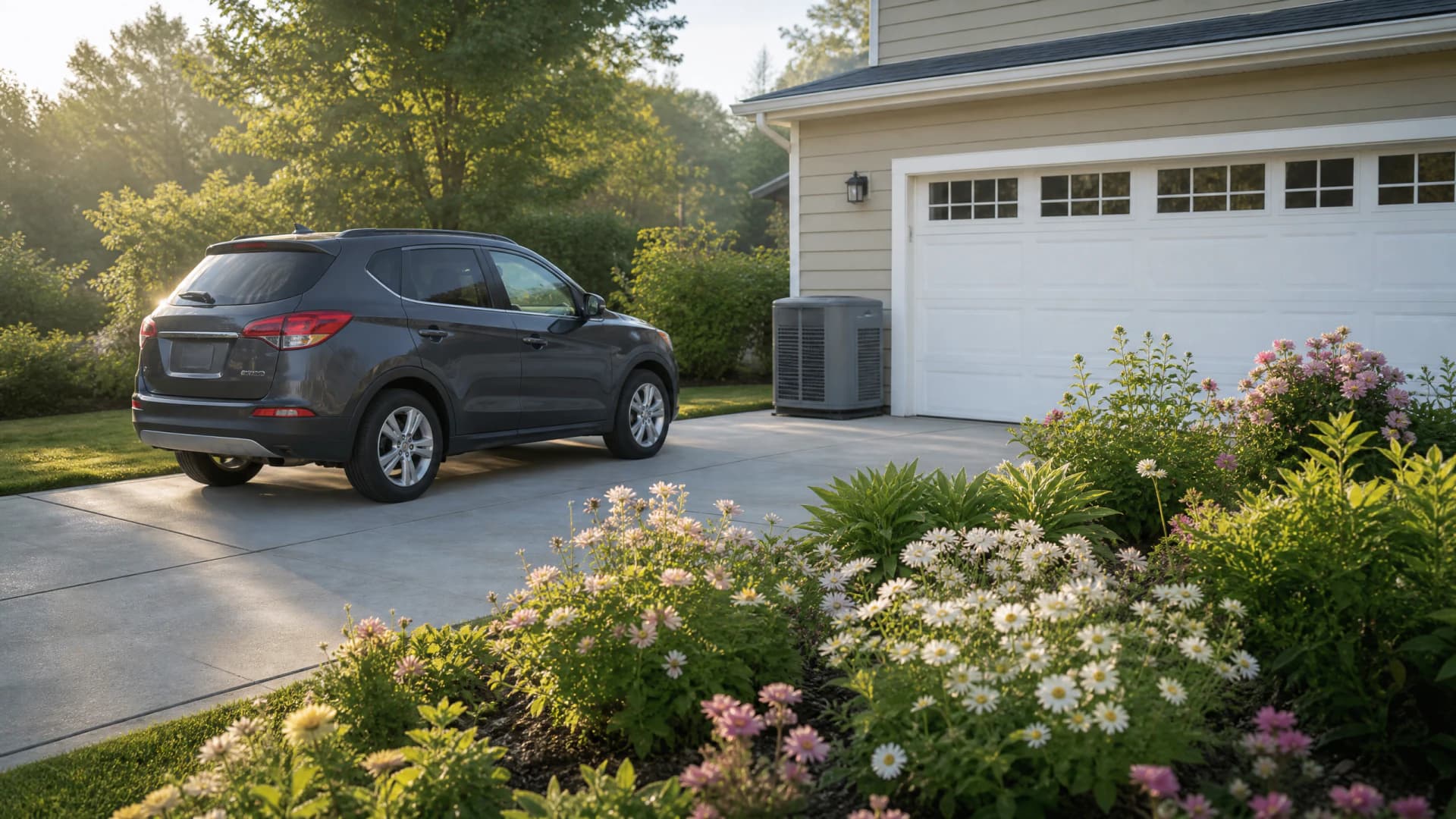
Snowbirds who spend seven or more months in their winter state, or who drive a second vehicle kept year-round at the winter property, often maintain two separate policies. This strategy avoids the six-month threshold entirely. Your South Carolina vehicle stays insured under a South Carolina policy, garaged at your South Carolina address. Your Florida vehicle is registered and insured in Florida under a separate policy, with a Florida address as the garaging location.
The two-policy structure eliminates any ambiguity about where each vehicle is principally garaged. If you own a car that never leaves Charleston and a second car that never leaves Naples, there's no calculation to track — each vehicle is insured in the state where it lives. This approach costs more in absolute dollars because you're paying for two full policies, but it prevents the most common snowbird claim denial scenario: the carrier discovering your vehicle exceeded six months in the non-policy state after an accident.
Some carriers offer multi-car discounts that partially offset the cost of a second policy. If both policies are with the same insurer, you may qualify for a 5–10% reduction on each. That discount doesn't make two policies cheaper than one, but it narrows the gap enough that many snowbirds accept the higher cost in exchange for eliminating coverage risk.

Get Covered in Both of Your Home States
Compare Snowbird Auto Insurance RatesWhat Happens If You Cross the Six-Month Threshold Mid-Winter
The six-month threshold resets every calendar year on January 1. If you arrived in Florida on November 15 and stay until May 20, you've split your time across two calendar years. In year one, you were in Florida for 46 days. In year two, you were there for 140 days. Neither year exceeds 183 days in Florida, so your South Carolina policy remains valid as long as your vehicle returns to South Carolina and is garaged there for the remainder of year two.
The problem arises when you extend your stay or delay your return. If you remain in Florida from November through late June, you've crossed the 183-day threshold in the second calendar year. At that moment, Florida becomes your vehicle's principal garaging location, and South Carolina law requires you to re-register the vehicle in Florida and obtain a Florida policy. If you don't make that change and you file a claim in July, the carrier can deny coverage based on the garaging location mismatch — even though you were fully insured under a valid South Carolina policy when the calendar year began.
Most carriers don't monitor your physical location in real time. They rely on the address you provided at policy inception and periodic declarations you make at renewal. If your travel pattern changes mid-term and you cross the threshold, you're responsible for notifying the carrier and initiating the policy transfer. Waiting until renewal to address it leaves you uninsured for any claims that occur in the gap period.

How to Transition From One Policy to Two Without a Coverage Gap
If you've decided to establish a second policy, the transition must be timed to avoid any lapse. Start by obtaining quotes for the new state policy at least 30 days before you plan to make the change. Confirm the effective date of the new policy will align with the cancellation date of the old one. Most carriers allow you to set a future effective date, which lets you lock in the new coverage before canceling the original.
Once the new policy is bound and active, contact your original carrier and request cancellation effective on the same date the new policy began. South Carolina insurers are required to refund the unearned premium on a pro-rata basis if you cancel mid-term. If you paid for six months in advance and cancel after two months, you'll receive a refund for the remaining four months, minus any applicable cancellation fee. Most carriers charge $25–$50 for mid-term cancellation unless you're moving out of state, in which case the fee is often waived.
Do not cancel your original policy before the new one is active. Even a single day without coverage can trigger a lapse notation on your insurance history, which increases your rates for the next three years. If the timing doesn't align perfectly, extend your original policy by one month rather than risking a gap.

Which Carriers Write Snowbird-Friendly Policies in South Carolina
Not all carriers handle seasonal relocation the same way. Some treat any out-of-state stay longer than 90 days as a red flag and require policy modification. Others accommodate six-month winter stays without issue as long as you disclose the travel pattern upfront. The carriers most experienced with snowbird customers in South Carolina include GEICO, State Farm, Progressive, and Allstate — all of which write policies in both South Carolina and the most common snowbird destination states.
GEICO allows temporary relocation coverage for up to six months and adjusts rates based on the winter garaging location. If you provide your Florida address at the start of the policy term, the rate reflects both locations from day one. State Farm operates similarly but routes snowbird policies through agents rather than direct-to-consumer channels, which gives you access to someone who can walk through the garaging calculation with you before your travel dates are finalized.
Progressive and Allstate both offer multi-state coverage but require annual re-verification of your garaging location at renewal. If your travel pattern changes, you must update it during the renewal process or risk a claim denial. USAA, if you're eligible through military service, has the most flexible snowbird policies and routinely insures members who split time evenly between two states, though their underwriting still requires one state to be designated as the principal garaging location.
Frequently Asked Questions
Can I keep my South Carolina insurance if I spend five months in Florida?
Yes, as long as your vehicle is garaged in South Carolina for more than 183 days in the calendar year. Five months in Florida leaves you under the six-month threshold, so your South Carolina policy remains valid. Notify your carrier of your winter address so they can adjust your rate if needed.
What happens if I stay in Florida longer than planned and cross six months?
You're required to re-register your vehicle in Florida and obtain a Florida policy once you pass 183 days garaged there in a calendar year. If you don't make that change and file a claim afterward, your South Carolina carrier can deny coverage based on incorrect garaging location.
Do I need to tell my insurance company I'm a snowbird?
Yes. Even if your policy remains South Carolina-based, your carrier needs your winter address to price your coverage accurately. Some insurers adjust rates by 5–15% to account for the risk profile of your winter location, which is legal and standard practice.
Is it cheaper to have one policy or two?
One policy covering both locations is cheaper in total premium dollars, but only works if your vehicle stays in South Carolina more than six months per year. Two policies cost more but eliminate any risk of crossing the garaging threshold and give you cleaner separation if you own a vehicle in each state.
Which insurance companies are best for South Carolina snowbirds?
GEICO, State Farm, Progressive, and Allstate all write policies in South Carolina and common snowbird destination states, and all accommodate six-month temporary relocation. USAA offers the most flexible snowbird coverage if you qualify through military service.
Related Articles

SC Snowbird Insurance: Permanent vs Seasonal Coverage
5/19/2026

One Car or Two? Pittsburgh to Hilton Head Snowbirds
4/26/2026

SC 60-Day Rule: Out-of-State Coverage for Snowbirds
5/19/2026

After 180 Days in SC: Out-of-State Coverage Rules
5/19/2026

Snowbird vs Resident: SC Insurance & Registration Rules
5/19/2026

After 30 Days in SC: Does Out-of-State Coverage Apply?
5/19/2026