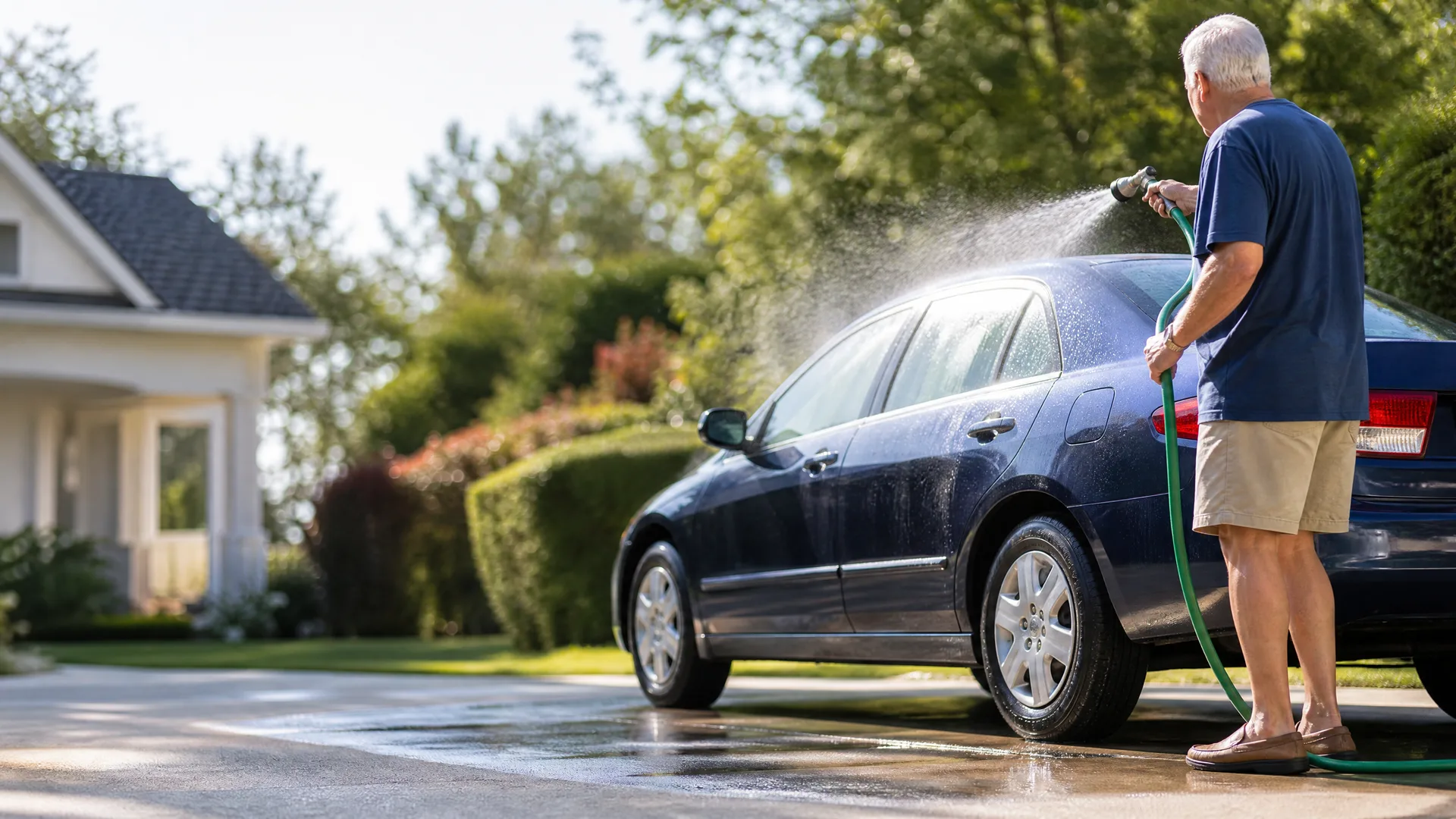
Philadelphia to Boca Raton: Snowbird Auto Insurance Transition
Free to compare
When Does Your Pennsylvania Auto Policy Cover Your Vehicle in Florida?
Your Pennsylvania auto policy covers your vehicle anywhere in the United States, including Florida, for short-term travel — typically defined as stays under 90 consecutive days. Most carriers consider a winter stay of three months or fewer as temporary travel requiring no policy modification.
The issue emerges when your Florida stay extends beyond three months or when you establish a pattern of spending more than half the year in Florida. At that point, most Pennsylvania carriers classify your Florida residence as your primary garaging location, which changes your risk rating and may trigger a requirement to rewrite the policy under Florida rates and coverage rules.
Under current state requirements, if your vehicle is physically present in Florida for 183 days or more in any calendar year — whether consecutive or cumulative across multiple trips — Florida law considers you a Florida resident for vehicle registration purposes. Pennsylvania carriers cannot legally insure a vehicle primarily garaged in Florida under a Pennsylvania policy without adding a specific endorsement or rewriting the policy entirely.

Do You Need to Register Your Vehicle in Florida as a Snowbird?
Florida Statute 320.02 requires vehicle registration in Florida if you are employed in Florida, place your children in Florida public schools, or establish a permanent residence and remain in the state for more than 183 days during any 12-month period. The 183-day count is cumulative — multiple shorter trips across a calendar year combine toward the threshold.
Most snowbirds spending November through March in Boca Raton or Delray Beach fall below the 183-day mark and do not need Florida registration. A typical five-month winter stay totals roughly 150 days, leaving margin below the statutory threshold. If you extend your stay into April or make additional trips to Florida during the summer, you may cross the 183-day line without realizing it.
Florida law enforcement and the Department of Highway Safety enforce this primarily during traffic stops. If you are stopped while driving a Pennsylvania-registered vehicle and your Florida address appears on your driver's license or insurance card, the officer may issue a citation for failure to register. The fine for operating an unregistered vehicle in Florida is $164 for a first offense, and your vehicle can be impounded until proof of valid Florida registration is provided.


How Pennsylvania Carriers Handle Snowbird Winter Addresses
Most Pennsylvania carriers allow you to add a seasonal Florida address to your policy without rewriting the entire policy, provided you maintain your Pennsylvania residence as your primary legal domicile and spend fewer than 183 days per year in Florida. This is typically added as a "winter garaging location" endorsement.
The endorsement accomplishes two things: it notifies the carrier that your vehicle will be garaged at a Florida address for part of the year, and it allows the carrier to adjust your comprehensive and collision premiums to reflect Florida theft and weather risk. Comprehensive premiums in Boca Raton and Delray Beach run 15–25% higher than in the Philadelphia suburbs due to higher hurricane exposure and vehicle theft rates in South Florida.
If you do not add the winter location endorsement and file a comprehensive claim while your vehicle is in Florida — for example, a theft claim or hurricane damage — your carrier may deny the claim on the grounds that you misrepresented your garaging location. This is the single most common claim denial scenario for snowbirds, and most drivers are unaware of the endorsement requirement until a claim is denied.
What Happens to Your Rates When You Add a Florida Winter Address?
Adding a Florida winter garaging location to your Pennsylvania policy increases your comprehensive premium but typically does not affect liability, collision, or medical payments coverage. The rate adjustment reflects the higher theft and storm risk in your Florida ZIP code compared to your Pennsylvania home address.
For a vehicle garaged in Boca Raton (ZIP 33432) or Delray Beach (ZIP 33444) for five months per year, expect comprehensive premiums to increase by $8–$15 per month compared to a Pennsylvania-only policy. This increase is prorated based on the number of months you spend in Florida. A snowbird spending November through March in Florida pays the Florida-adjusted comprehensive rate for five months and the Pennsylvania rate for seven months.
Some Pennsylvania carriers do not offer winter location endorsements and instead require you to rewrite the policy entirely under Florida rules if you spend more than 90 days in the state. State Farm, Erie, and Nationwide typically allow endorsements. Progressive and GEICO often require a full Florida policy rewrite for stays longer than three months, which can increase your total annual premium by $200–$400 due to Florida's higher minimum liability requirements and personal injury protection mandates.
Get Covered in Both of Your Home States
Compare Snowbird Auto Insurance Rates
Florida's No-Fault Insurance Requirement and Pennsylvania Snowbirds
Florida is a no-fault state requiring $10,000 in personal injury protection coverage on every registered vehicle. Pennsylvania is a choice no-fault state, meaning PIP coverage is optional unless you reject it in writing. If you register your vehicle in Florida, you must carry Florida PIP coverage regardless of your Pennsylvania policy structure.
Most snowbirds maintaining Pennsylvania registration are not required to add Florida PIP to their policy, because Pennsylvania law governs the policy terms as long as the vehicle remains registered in Pennsylvania. The exception occurs if you are involved in an at-fault accident in Florida and the other party carries PIP coverage — Florida law allows them to recover up to their PIP limit from your liability coverage before pursuing additional damages.
If you do register your vehicle in Florida as a snowbird, you will need a standalone Florida policy with the state's minimum coverage: $10,000 PIP and $10,000 property damage liability. Florida does not require bodily injury liability coverage unless you have been convicted of certain violations, but driving without it exposes you to significant out-of-pocket risk in an at-fault accident. Most financial advisors recommend snowbirds carry at least $100,000/$300,000 bodily injury liability regardless of state minimums.

How to Maintain Continuous Coverage During the Transition
The highest-risk period for coverage gaps occurs during your drive between Pennsylvania and Florida. If you cancel your Pennsylvania policy before arriving in Florida and delay purchasing a Florida policy until after you arrive, you drive uninsured during the transition — a violation in every state you pass through.
The correct sequence: contact your Pennsylvania carrier 30 days before your departure date and request a winter location endorsement effective the date you arrive in Florida. Confirm in writing that the endorsement covers your vehicle at your Florida address for the full duration of your stay. Do not cancel or modify your Pennsylvania policy until you have written confirmation that the Florida address is active on your policy.
If your carrier does not offer winter endorsements and requires you to switch to a Florida policy, overlap your coverage by at least 48 hours. Purchase the Florida policy with an effective date matching your expected arrival date, but do not cancel your Pennsylvania policy until you have confirmed the Florida policy is active and you have received your Florida insurance ID cards. Most carriers allow you to cancel mid-term with a prorated refund, so the overlap cost is minimal — typically $15–$25 for two days of dual coverage.
Which Carriers Write Policies That Cover Multi-State Snowbird Situations Cleanly?
State Farm, Nationwide, and Erie Insurance allow winter location endorsements for snowbirds spending up to six months in Florida without requiring a full policy rewrite. These carriers rate the policy based on your primary garaging location in Pennsylvania and apply a seasonal adjustment for the months your vehicle is in Florida.
Progressive and GEICO typically require a full Florida policy if your stay exceeds 90 days, which means canceling your Pennsylvania policy and rewriting under Florida rules. This approach works for snowbirds willing to manage two separate policies and accept Florida's higher minimum coverage requirements, but it introduces administrative complexity and a higher risk of coverage gaps during the transition.
USAA, available only to military members and their families, offers the most flexible snowbird coverage: a single policy that automatically adjusts rates based on your reported garaging location each month. You update your address in the USAA mobile app when you arrive in Florida and again when you return to Pennsylvania, and the system adjusts your comprehensive premium accordingly. No endorsement required, no policy rewrite, and no risk of claim denial due to unreported location changes.
Frequently Asked Questions
Can I keep my Pennsylvania car insurance if I spend five months a year in Florida?
Yes, as long as you maintain your Pennsylvania residence as your primary legal domicile and spend fewer than 183 days per year in Florida. Most Pennsylvania carriers require you to add a winter location endorsement to your policy notifying them that your vehicle will be garaged in Florida for part of the year, which adjusts your comprehensive premium to reflect Florida risk.
What happens if I file a claim in Florida without telling my Pennsylvania insurer about my winter address?
Your carrier may deny the claim on the grounds that you misrepresented your garaging location. This is the most common claim denial scenario for snowbirds — particularly for comprehensive claims involving theft or storm damage while the vehicle is in Florida. Adding a winter location endorsement costs $8–$15 per month but prevents this denial risk.
Do I need Florida license plates if I spend November through March in Boca Raton?
No, a five-month winter stay totals roughly 150 days, which falls below Florida's 183-day registration threshold. Florida law requires vehicle registration only if you are present in the state for 183 days or more in any 12-month period, whether consecutive or cumulative. If you extend your stay into April or make additional trips during the year, you may cross the threshold and trigger the registration requirement.
Which insurance companies allow snowbirds to keep one policy for both Pennsylvania and Florida?
State Farm, Nationwide, and Erie Insurance allow winter location endorsements for snowbirds spending up to six months in Florida without requiring a full policy rewrite. USAA offers automatic location-based rate adjustments through its mobile app. Progressive and GEICO typically require a separate Florida policy for stays longer than 90 days.
Related Articles
Philly to Boca Auto Insurance: Snowbird First Year
4/26/2026

Philly to Boca Raton Snowbird Insurance: PA vs FL at 75+
4/26/2026

Snowbird Insurance: PA to FL Coverage Guide
5/19/2026
Pennsylvania Snowbirds: Does Your Policy Cover Florida?
5/19/2026

PA-FL Snowbird Insurance: The Mid-Move Coverage Gap
5/19/2026

Can One Policy Cover PA and FL for Snowbirds?
5/19/2026