
Car Insurance Coverage Requirements — North Dakota
Free to compare
Why Your North Dakota Premium Changed Without a Ticket
You opened your renewal notice and the premium increased $18 per month. No accident. No ticket. Same vehicle, same address, same coverage limits. Your agent says it's normal age-based rating adjustment. What they didn't mention: North Dakota law requires your carrier to offer a mature-driver discount if you complete a state-approved defensive driving course, and that discount — which has no statutory floor — never appears automatically at renewal.
The state minimum liability limits are $25,000 per person for bodily injury, $50,000 per accident, and $25,000 for property damage. North Dakota also requires personal injury protection (PIP) and uninsured motorist coverage on every policy. Those minimums haven't changed. What changed is how your carrier prices your profile at 65-plus, and whether you've activated the one discount mechanism state law guarantees you can access.
“The statute mandates the discount offer, not the disclosure — most agents never mention the course requirement at renewal.”

Get Covered in Both of Your Home States
Compare Snowbird Auto Insurance Rates$111–$148
ND Senior Monthly Premium
Average monthly premium for North Dakota drivers ages 65-99, based on 2026 senior rate data. Your actual rate depends on driving record, vehicle, coverage selections, and whether you've submitted a mature-driver course certificate.
MoneyGeek + Insure.com senior-by-state analysis, 2026
What North Dakota Law Actually Requires
N.D.C.C. 26.1-25-04.1 requires every insurer writing auto policies in North Dakota to offer an "appropriate reduction" in premium to any driver who completes a state-approved defensive driving course. The statute is age-neutral — it doesn't say "senior" — but the course requirement makes it function as a mature-driver discount in practice. The law sets no percentage. The carrier files the amount with the state Insurance Department, and you find out what yours is only when you ask.
Most carriers apply the discount only after you submit proof of course completion. The certificate doesn't auto-populate at renewal. If you completed the course three years ago and never sent the certificate to your agent, you've been paying the higher rate every renewal cycle since. The discount typically requires re-enrollment every three years, but some carriers lapse it sooner if the certificate on file expires.
The state-approved course list lives on the North Dakota Insurance Department website. Courses not on that list do not qualify, even if the provider markets them as "senior driver safety." AARP and AAA both offer approved courses, but verify the specific course code before enrolling — the provider name alone doesn't guarantee state approval.
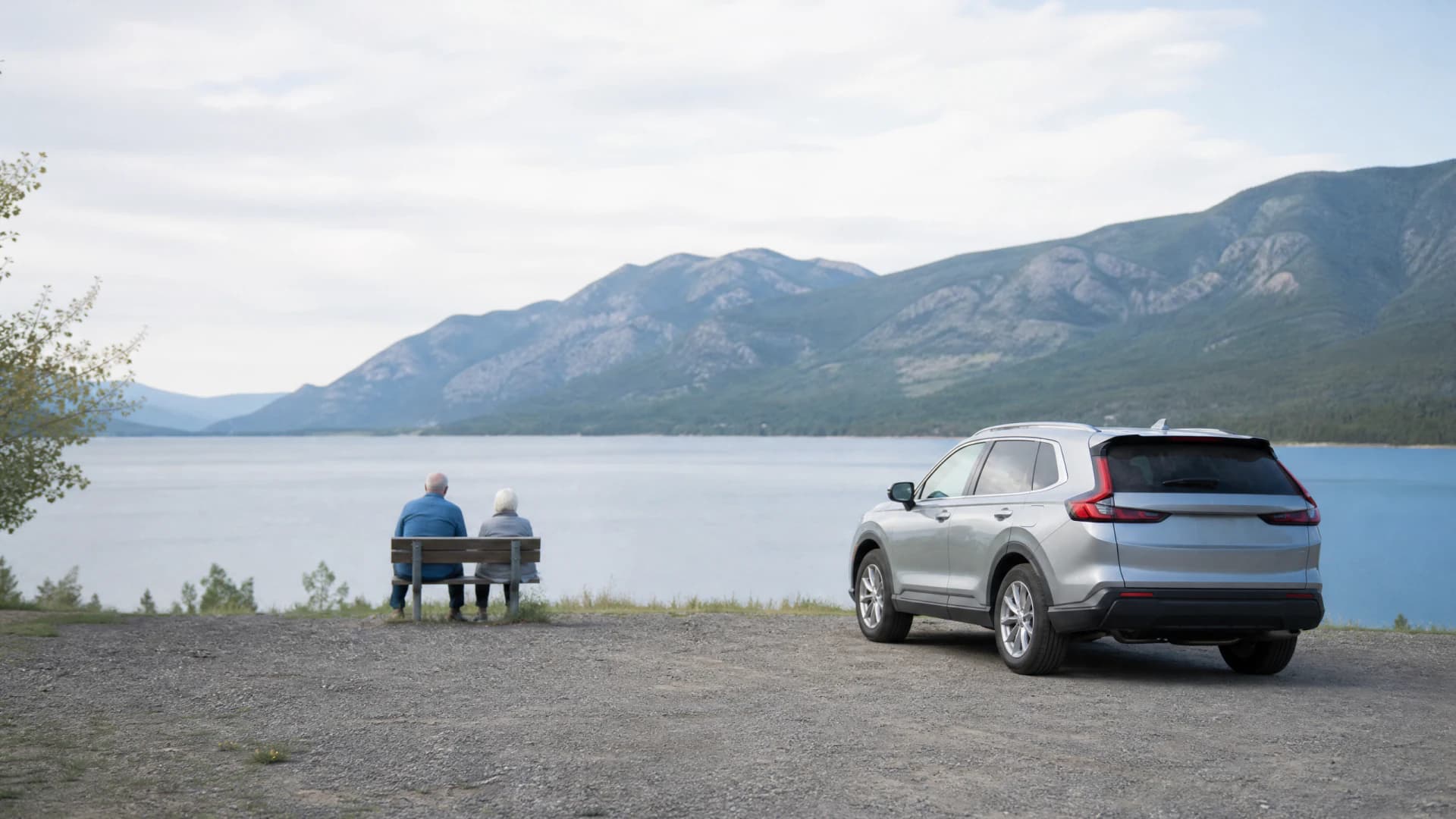
Your carrier won't tell you the discount percentage until you ask, and most agents never mention the course requirement at renewal — the statute mandates the offer, not the disclosure.
Related Articles

South Dakota Car Insurance Requirements
7/13/2026
Nebraska Car Insurance Coverage Requirements
7/13/2026

DC to Asheville Move: Real Insurance Costs for Seniors
4/26/2026

Idaho Car Insurance Requirements
7/13/2026

Snowbird Insurance: Not Disclosing Arizona Time Risk
5/19/2026
Oklahoma Car Insurance Requirements
7/13/2026

What the Minimum Limits Actually Cover
North Dakota's $25,000-per-person bodily injury limit covers medical bills, lost wages, and pain-and-suffering claims from one injured person in an at-fault accident you cause. The $50,000-per-accident limit is the total available when multiple people are injured. The $25,000 property damage limit covers the other driver's vehicle, fence, building, or any property you hit. These are liability minimums — they pay the other party's costs when you're at fault, not your own.
If you own property, have retirement savings, or collect pension income, the state minimums expose those assets in a serious at-fault crash. A two-car accident with injuries can generate $150,000 in combined medical and property claims. Your policy pays the first $50,000 for injuries and $25,000 for property; you're personally liable for the remaining $75,000. North Dakota is a tort state, meaning the at-fault driver pays. The minimum limits satisfy state law but rarely cover the full cost of a multi-vehicle crash.
Uninsured motorist coverage is mandatory in North Dakota and mirrors your liability limits unless you reject it in writing. This coverage pays your medical bills and vehicle damage when an uninsured driver hits you. North Dakota's uninsured rate is 10.6 percent — roughly one in ten drivers on the road carries no insurance. Your uninsured motorist coverage is the only protection you have when one of them causes the crash.
Personal injury protection (PIP) is also mandatory. North Dakota PIP pays your medical bills and lost income regardless of fault, up to the limit you select. It coordinates with Medicare: Medicare pays first for covered services, and PIP covers the gaps Medicare doesn't. If you're on Medicare and carry the state-minimum PIP, the combination usually covers immediate medical costs. Higher PIP limits make sense if you have out-of-pocket Medicare expenses or need income replacement after an injury.
10.6%
ND Uninsured Driver Rate
One in ten North Dakota drivers carries no insurance. Your uninsured motorist coverage is the only financial protection when one of them causes a crash and has no policy to pay your claim.
Insurance Research Council, 2023

Snowbird Registration and Coverage Gaps
If you spend winters in Arizona, Florida, or Texas and summers in North Dakota, your insurance and registration must match where you actually live most of the year. North Dakota defines residency as your primary domicile — the state where you vote, file taxes, and hold your driver license. If you maintain North Dakota residency and spend fewer than six months in your winter state, your North Dakota policy and registration stay active.
The coverage gap appears when your garaging address changes but your policy doesn't. If you park your vehicle in Arizona from November through March, your North Dakota policy is priced for North Dakota weather, theft rates, and traffic density. Arizona's risk profile is different. If you file a claim in Arizona and your carrier discovers the vehicle has been garaged there for four months while your policy lists a Fargo address, they can deny the claim for material misrepresentation. The policy contract requires you to notify the carrier when your garaging address changes for more than 30 days.
Some carriers write multi-state policies that cover seasonal address changes without re-rating or re-registering. State Farm, GEICO, and Progressive all write snowbird-friendly policies, but you must disclose both addresses upfront. Other carriers require you to switch your policy to the winter state if you're there more than 90 days. The registration trigger varies by state: Florida requires registration after 183 days, Arizona after six months, Texas after 90 days. Missing the registration deadline can void your coverage even if your carrier never told you about the state requirement.
Compare What Your Current Carrier Actually Applies
Call your current carrier and ask three questions. First: what mature-driver discount percentage do you apply after course completion, and does it require re-enrollment every three years or does the certificate stay active longer? Second: do you cover seasonal address changes without re-rating, or do I need to switch my policy when I'm in my winter state more than 90 days? Third: if I increase my liability limits to $100,000 per person and $300,000 per accident, what does my premium become?
Then compare against at least two other carriers writing in North Dakota. State Farm, GEICO, Progressive, Nationwide, and American Family all write standard-tier policies here and all file mature-driver discounts with the state. The percentage varies by carrier. One may apply 8 percent after course completion; another may apply 12 percent but require re-enrollment every two years. You won't know until you ask each one directly. Online quote tools rarely surface the mature-driver discount unless you manually enter the course completion date, and most don't ask.
If you're a snowbird, ask whether the carrier writes policies in both states and whether they handle seasonal garaging-address changes within one policy or require two separate policies. Farmers, Liberty Mutual, and Allstate all write in North Dakota and most Sun Belt states, but their multi-state policy structures differ. Some let you list two garaging addresses and rate the policy as a blended average; others require you to cancel and re-issue every time you move. The wrong structure creates a coverage gap every spring and fall.

What to Do Before Your Next Renewal
Verify whether your current carrier has a mature-driver course certificate on file. If not, enroll in a state-approved course now — completion takes one to two weeks, and the certificate must reach your agent before your renewal date to apply this cycle. If your renewal is in less than 30 days, you'll miss this cycle and the discount applies at the following renewal. Submit the certificate as soon as you receive it; don't wait for the renewal notice.
If you're a snowbird, confirm your policy lists both your North Dakota and winter-state garaging addresses and that your carrier rates the policy to cover both. If your current carrier can't do that cleanly, get quotes from State Farm, GEICO, and Progressive — all three write snowbird-friendly policies and all three write in North Dakota and every major Sun Belt state. Ask each one how they handle the seasonal address change and what the mature-driver discount percentage is after course completion. The combination of multi-state structure and discount percentage determines which carrier works best for your situation.
How to Activate the Discount Before Your Next Renewal
First, enroll in a state-approved defensive driving course. The North Dakota Insurance Department maintains the approved-provider list; verify the course appears there before paying. AARP's Smart Driver course and AAA's Roadwise Driver both qualify in North Dakota. Online courses count if they're on the approved list. Completion takes four to eight hours depending on the provider. Cost varies by provider; the state sets no price ceiling.
Second, submit the completion certificate to your insurance agent or carrier before your renewal date. Most carriers require the original certificate or a certified copy; a photo of the certificate often doesn't work. If your renewal is in 45 days and the course takes two weeks to mail the certificate, you'll miss this renewal cycle. The discount applies from the renewal date following submission, not retroactively. If the certificate arrives after renewal processes, you wait another six months or a year depending on your policy term.
Get Your Free Quote
Compare Snowbird Auto Insurance RatesFrequently Asked Questions
Does North Dakota require a senior discount on car insurance?
Yes. N.D.C.C. 26.1-25-04.1 requires every insurer to offer a premium reduction to drivers who complete a state-approved defensive driving course. The law sets no percentage; each carrier files its own amount. You must submit proof of course completion to activate the discount.
How much is the mature-driver discount in North Dakota?
The statute does not fix a percentage. Each carrier sets its own discount amount and files it with the state Insurance Department. You find out what yours is only when you ask your carrier directly. Typical filings range from 5 to 15 percent, but your carrier's amount may differ.
Do I need to retake the defensive driving course every few years?
Most North Dakota carriers require re-enrollment every three years to keep the discount active. Some lapse it sooner if the certificate on file expires. Ask your carrier how long your certificate stays valid and whether they notify you before it expires.
What happens if I spend winters in Arizona but keep my North Dakota insurance?
Your policy must list both garaging addresses if the vehicle is parked in Arizona for more than 30 days. If your carrier discovers a four-month Arizona stay while your policy lists only a North Dakota address, they can deny claims for material misrepresentation. Disclose both addresses upfront.
Is $25,000 per person enough liability coverage for a retired driver?
No, if you own property or have retirement savings. A serious at-fault crash can generate $150,000 in injury and property claims. The state minimum pays the first $50,000 for injuries and $25,000 for property; you're personally liable for the rest. Consider $100,000/$300,000/$100,000 if you have assets to protect.
Which North Dakota carriers offer the best mature-driver discounts?
State Farm, GEICO, Progressive, Nationwide, and American Family all file mature-driver discounts in North Dakota, but the percentage varies by carrier and isn't published. Call each one and ask what discount percentage they apply after course completion and whether it requires re-enrollment every three years.