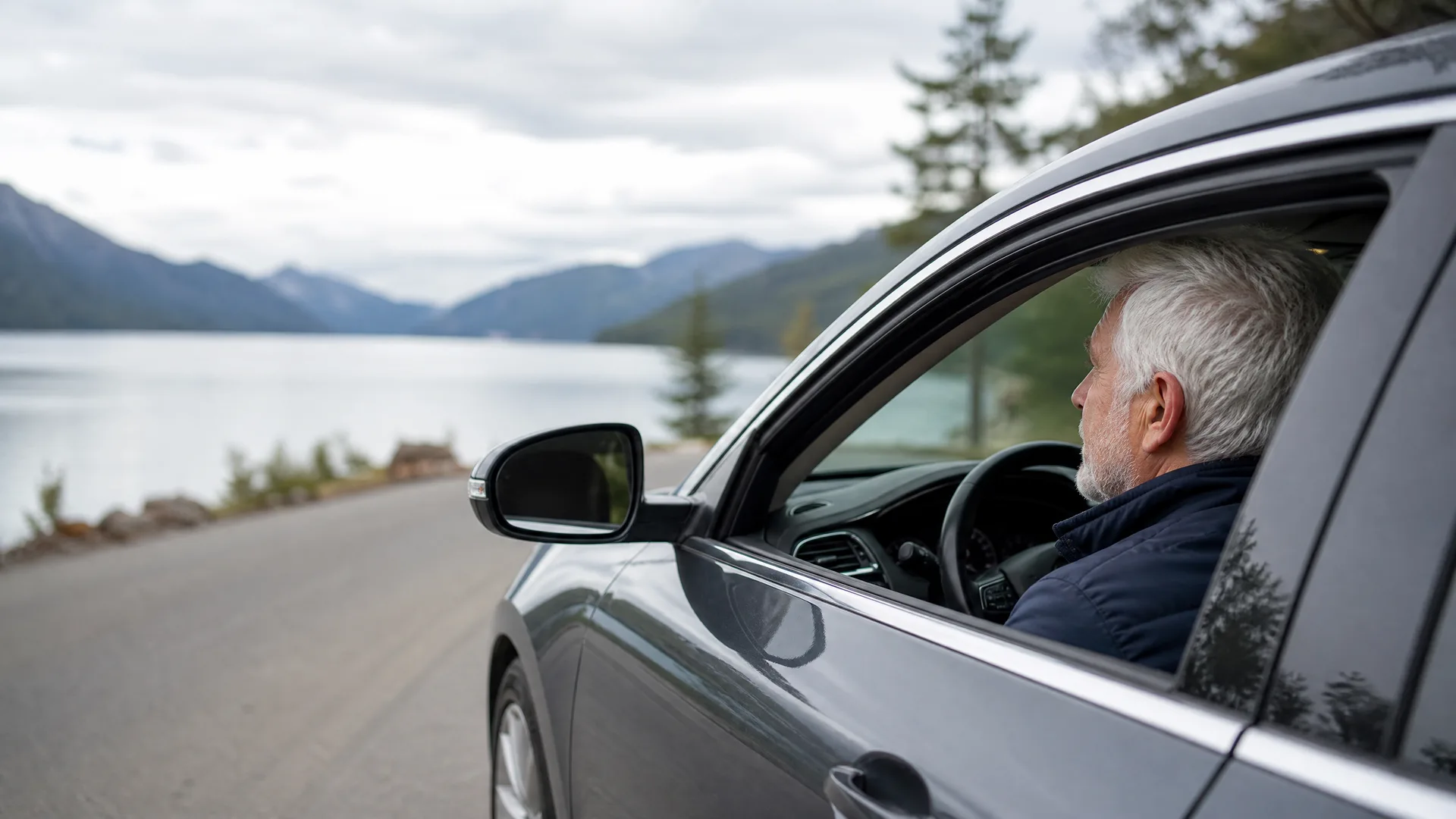
What Happens If You Don't Disclose SC Time as a NY Snowbird?
Free to compare
Why Carriers Ask About Time Spent in Other States
Auto insurance rates are priced to the state where your vehicle is principally garaged. South Carolina has different accident rates, theft rates, liability minimum requirements, and claim costs than New York. A carrier pricing your policy as a New York vehicle assumes New York risk exposure for the full year.
When you spend five months in South Carolina, your vehicle faces South Carolina driving conditions, weather patterns, and claim environments for nearly half the year. The carrier's actuarial model no longer matches your actual risk profile. That mismatch creates two problems: you may be underinsured for South Carolina-specific exposures, and the carrier may deny or reduce a claim filed in South Carolina if they discover the disclosure gap during investigation.
Most personal auto policies require you to notify the carrier of any change in garaging address or principal location. Spending 150+ days per year in a second state typically qualifies as a material change under policy terms. The question isn't whether the carrier will find out — it's whether they find out before or during a claim.
South Carolina's Residency and Registration Triggers
South Carolina law does not use a single bright-line rule for vehicle registration. The state considers you a resident for vehicle purposes if you are gainfully employed in South Carolina, enrolled in a South Carolina school for more than 30 days, or living in the state with intent to remain indefinitely. Snowbirds occupying a second home seasonally fall into a gray area that turns on duration and specific activity patterns.
South Carolina Department of Motor Vehicles guidance states that anyone establishing residency must register their vehicle within 45 days. The dispute centers on what constitutes 'establishing residency' for someone who owns property in two states. Courts and law enforcement typically use the 183-day threshold as a residency presumption: if you are present in South Carolina for more than half the year, registration becomes mandatory regardless of your stated intent.
If you spend November through March in South Carolina, you are there approximately 150 days. That falls below the 183-day statutory presumption, but South Carolina law enforcement and DMV have discretion to examine additional factors: where you receive mail, where your driver's license is issued, where you vote, and whether you have registered to vote or filed taxes as a South Carolina resident. A snowbird spending five months annually in South Carolina while maintaining exclusive New York ties elsewhere generally does not trigger mandatory South Carolina registration. A snowbird who registers to vote in South Carolina, obtains a South Carolina driver's license, or files as a South Carolina resident for tax purposes crosses into mandatory registration territory even if physical presence remains under 183 days.

What Your New York Policy Actually Covers in South Carolina
Most New York auto policies provide coverage nationwide. If you drive your New York-plated vehicle to South Carolina and have an at-fault accident there, your New York liability coverage applies. Your collision and comprehensive coverage also apply. The policy does not automatically void because you crossed state lines.
The problem arises during the claim investigation. Carriers ask where the vehicle is principally garaged and how much time it spends in each state. If the adjuster discovers you spend five months per year in South Carolina but listed New York as the only garaging location, the carrier can investigate whether you materially misrepresented your risk profile at policy inception or renewal. Material misrepresentation allows the carrier to rescind the policy retroactively or deny the claim.
Rescission is rare but not theoretical. Carriers pursue it most aggressively in high-dollar liability claims or total-loss scenarios where the payout justifies the investigative cost. If you cause a serious accident in South Carolina and the carrier discovers during investigation that you spend nearly half the year there but never disclosed it, expect the claim to be flagged for coverage review. The carrier may pay the claim and then non-renew you, or they may deny coverage and force you to litigate whether the non-disclosure was material.
How Carriers Discover Undisclosed Second-State Time
Claim investigations pull GPS data from telematics devices if you enrolled in usage-based insurance. They pull repair shop records that show service addresses in South Carolina. They review medical records and police reports that document where the accident occurred and where you stated you were traveling from. Adjusters search property records to confirm whether you own a second home and cross-reference that against garaging address declarations.
Renewal underwriting reviews are less thorough, but carriers increasingly use third-party data aggregators that flag multi-state property ownership and compare it to the garaging address on file. If the system flags a South Carolina property tied to your name and you listed New York as the sole garaging location, the carrier may send a verification request asking you to confirm where the vehicle is kept during winter months.
Social media, EZ-Pass toll records, and credit card transaction patterns are rarely pulled for routine underwriting but surface during fraud investigations. A carrier investigating a suspicious claim may subpoena these records. Posting photos from your South Carolina home with your vehicle visible in the driveway throughout winter months provides documentation the carrier will use.

Get Covered in Both of Your Home States
Compare Snowbird Auto Insurance Rates
What to Disclose and When
Call your carrier before your first winter departure and provide the exact South Carolina address where the vehicle will be garaged, the anticipated dates you will be there, and confirmation that you maintain a New York residence and registration. Ask the carrier to document the disclosure in your file and confirm whether your current policy covers the vehicle adequately in both states.
Some carriers will add the South Carolina address as a secondary garaging location at no additional cost. Others will re-rate the policy using a blended formula that accounts for time in each state. A small subset of carriers writing in New York do not underwrite snowbird risks and may require you to obtain a South Carolina policy or find a different carrier. Knowing the carrier's position before you leave prevents coverage gaps.
If your carrier re-rates the policy, expect the premium to reflect South Carolina's rate environment. South Carolina average rates are often lower than New York rates, but the final premium depends on your specific county, coverage limits, and driving record. A snowbird moving from New York City to Myrtle Beach may see a rate decrease. A snowbird moving from rural upstate New York to Charleston may see an increase.

Should You Register and Insure in South Carolina Instead?
If you spend more than 183 days per year in South Carolina or establish legal residency there by obtaining a South Carolina driver's license, registering to vote, or filing taxes as a resident, South Carolina registration becomes mandatory. At that point, maintaining a New York registration is no longer optional.
If you remain under the 183-day threshold and maintain exclusive legal ties to New York, you have a choice. Some snowbirds prefer to register and insure in South Carolina because South Carolina registration fees and insurance rates may be lower than New York. Others prefer to keep everything in New York to avoid managing two-state paperwork and to preserve New York residency status for tax or voting purposes.
The key variable is carrier willingness to write a policy that covers your actual usage pattern. If your New York carrier refuses to cover a vehicle spending five months per year in South Carolina, you must either switch to a carrier that will or obtain a South Carolina policy. Operating without valid coverage in either state is not a legally available option.
Consequences of Non-Disclosure Discovered After a Claim
A carrier that discovers material non-disclosure during a claim investigation can deny the claim, rescind the policy retroactively to the date the misrepresentation occurred, or pay the claim and immediately cancel the policy. The specific outcome depends on state law, policy language, and the severity of the non-disclosure.
New York Insurance Law Section 3105 allows rescission for material misrepresentation made with intent to deceive or that increases the risk of loss. Courts interpret 'intent to deceive' narrowly: failing to update your garaging address because you didn't realize it mattered is treated differently than affirmatively lying on an application. A snowbird who answers 'New York' when asked for garaging address because that's where the vehicle is registered, without disclosing the five-month South Carolina stay, occupies a middle zone where the carrier must prove the non-disclosure was intentional and material.
Even if the carrier cannot prove intentional fraud, they can non-renew the policy at the next renewal period. Non-renewal for non-disclosure appears in CLUE reports and makes it harder to obtain coverage elsewhere. Some carriers will decline to quote anyone with a non-renewal flag tied to misrepresentation within the past three years.
Frequently Asked Questions
Do I need to tell my insurance company I spend winters in South Carolina?
Yes. Most auto policies require you to disclose any change in where your vehicle is principally garaged. Spending five months per year in South Carolina changes your garaging location and risk profile. Carriers price policies based on where the vehicle is kept, and failure to disclose a second state exposes you to claim denial or policy rescission if discovered later.
Will my New York auto insurance cover an accident in South Carolina?
Your New York policy provides nationwide coverage, so an accident in South Carolina is covered as long as the policy is valid. The issue arises if the carrier discovers during the claim investigation that you failed to disclose spending significant time in South Carolina. That non-disclosure can be grounds for claim denial or rescission if the carrier determines it was material to underwriting.
How does South Carolina know I'm spending time there if I keep my New York plates?
South Carolina law enforcement and DMV do not systematically track out-of-state plates, but you become visible if you are involved in an accident, pulled over for a traffic violation, or flagged during a routine registration check. Courts and DMV use the 183-day threshold as a residency presumption. If you spend more than half the year in South Carolina or establish legal residency through voting, tax filing, or obtaining a South Carolina driver's license, registration becomes mandatory.
What happens if my insurance company finds out I didn't disclose my South Carolina address?
The carrier can deny a pending claim, rescind your policy retroactively, or non-renew you at the next renewal. The specific consequence depends on whether the carrier can prove the non-disclosure was intentional and material to underwriting. Even if they cannot prove fraud, they can cancel or non-renew your policy, and that action appears in industry databases that other carriers review when you apply for coverage.
Related Articles

Snowbird Didn't Disclose South Carolina Time: What Happens
5/19/2026

Snowbird Insurance: PA Resident, SC Winters – Disclosure Rules
5/19/2026

SC Snowbird Insurance: Permanent vs Seasonal Coverage
5/19/2026

When NOT to Move to Hilton Head SC: Insurance Edge Cases
4/26/2026

What If Ohio Snowbird Doesn't Disclose SC Time?
5/19/2026

NYC to Hilton Head: Snowbird Auto Coverage Mid-Season
4/26/2026