
When NOT to Move from Boston to Asheville: Insurance Edge Cases
Free to compare
Why the Boston-to-Asheville Route Creates Unique Registration Conflicts
Massachusetts requires vehicle registration in-state if you maintain a Massachusetts driver's license and keep the vehicle in-state for more than 30 days during any 12-month period. North Carolina triggers mandatory registration when you obtain a North Carolina driver's license or establish legal residency, regardless of how many days you spend there.
If you're splitting time between a Boston-area home and an Asheville property without changing your driver's license, you likely need Massachusetts registration and a policy that extends coverage to North Carolina. If you switched your license to North Carolina to qualify for in-state tuition, healthcare access, or voting registration, North Carolina now requires registration there—even if you spend only four months per year in Asheville.
The conflict emerges when you try to maintain both. Massachusetts and North Carolina both prohibit registering the same vehicle simultaneously in two states. Most carriers won't write a policy listing two garaging addresses in different states for the same vehicle without documentation proving you own two vehicles or that one state has formally released the registration.

Which State's Rates Actually Apply When You Split Time
Your premium is calculated using the garaging address—the location where the vehicle is parked overnight most often. Massachusetts average premiums for drivers 65 and older range from $110 to $180 per month depending on coverage level and county. North Carolina premiums for the same demographic average $95 to $150 per month.
If you register in Massachusetts and spend November through March in Asheville, your rate remains anchored to your Massachusetts ZIP code. Carriers do not prorate premiums based on seasonal location changes unless you formally update your garaging address mid-policy term, which triggers a re-underwrite and may result in a policy nonrenewal if the carrier determines you misrepresented your primary location.
Some carriers offer seasonal relocation endorsements that adjust coverage territory without changing your base premium. USAA, State Farm, and Nationwide offer these for snowbird policyholders, but you must disclose the second address at the policy inception or renewal. Adding the Asheville address mid-term after a claim in North Carolina can result in claim denial if the carrier determines the vehicle was primarily garaged there without notification.
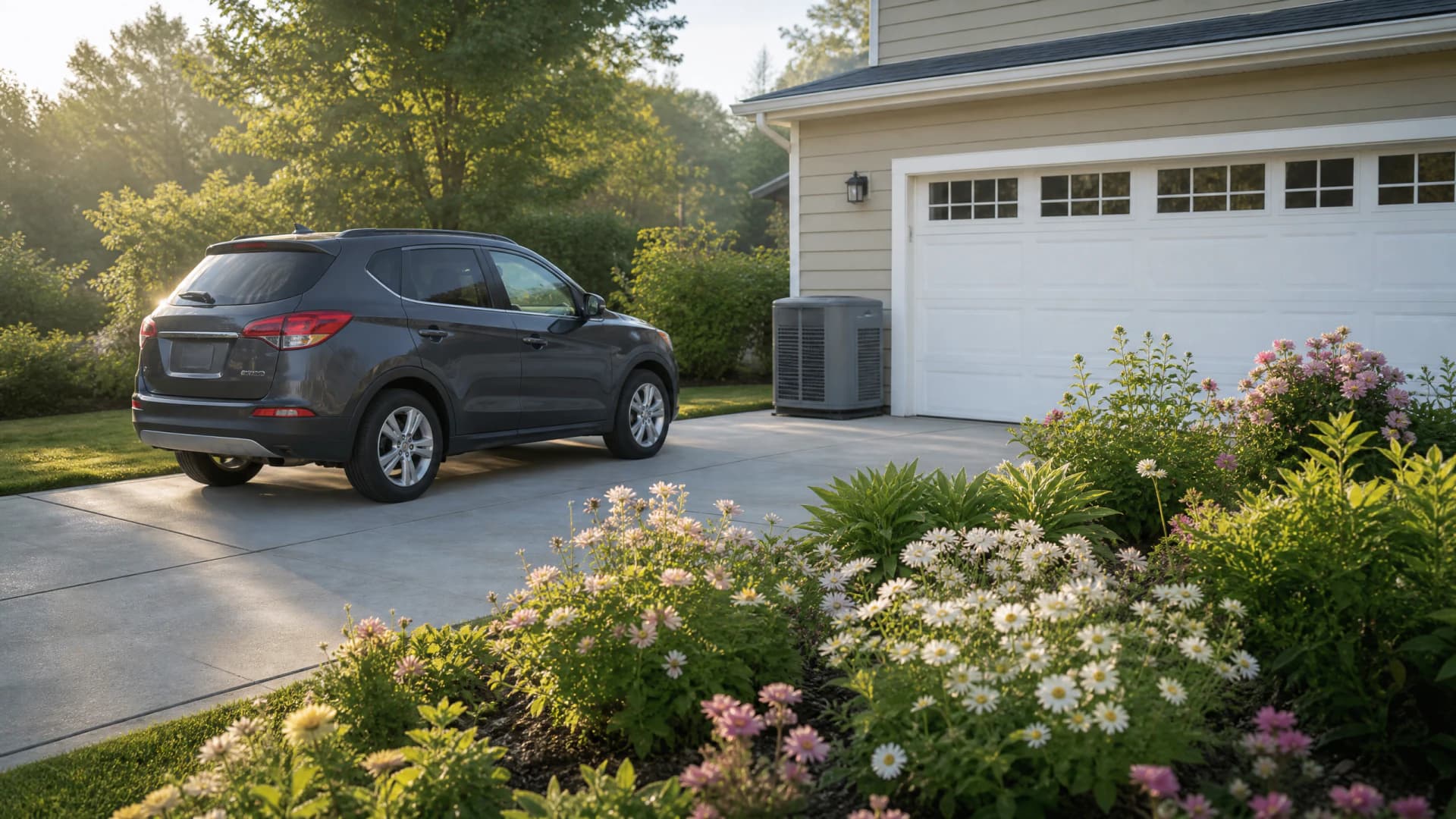

When Keeping Your Massachusetts Policy Becomes Legally Risky
North Carolina law requires registration within 60 days of establishing residency. Residency is defined as physical presence for more than 183 days in a calendar year, obtaining a North Carolina driver's license, registering to vote, or filing state income taxes as a resident.
If you spend May through October in Boston and November through April in Asheville, you remain under the 183-day threshold and can legally maintain Massachusetts registration. If you spend seven months in Asheville, you cross into North Carolina residency and are required to register there. Operating a Massachusetts-registered vehicle in North Carolina beyond the 60-day grace period after establishing residency is a Class 2 misdemeanor carrying fines up to $1,000 and potential license suspension.
Massachusetts does not penalize out-of-state registration if you are no longer a resident, but if you maintain a Massachusetts driver's license while living primarily in North Carolina, you create a documentation mismatch that both states can challenge during a traffic stop or claim investigation.
How Dual Property Ownership Complicates Coverage Territory
Owning property in both states does not automatically grant you the right to register in the state of your choice. Registration follows the vehicle's primary garaging location and the owner's legal residency, not property ownership.
If you own a condo in Boston and a house in Asheville, and you keep your Massachusetts driver's license, you can register in Massachusetts as long as the vehicle returns to Massachusetts for more than half the year. If you switch your driver's license to North Carolina to access state benefits, North Carolina requires registration there regardless of where you own property.
Some seniors attempt to register the vehicle at their adult child's Massachusetts address to maintain lower premiums while living primarily in North Carolina. This is insurance fraud. Carriers verify garaging addresses through claims history, EZ-Pass records, and inspection station locations. If a claim occurs in Asheville and the policy lists a Boston garaging address, the carrier can deny the claim and cancel the policy retroactively.

Get Covered in Both of Your Home States
Compare Snowbird Auto Insurance Rates
What Happens to Your Rates If You Switch States Mid-Year
Changing your garaging address from Massachusetts to North Carolina mid-policy term requires notifying your carrier within 30 days under most policy contracts. The carrier will re-rate your policy based on the new ZIP code, driving record in the new state, and state-mandated coverage requirements.
North Carolina requires minimum liability limits of 30/60/25. Massachusetts requires 20/40/5. If you're moving from Massachusetts to North Carolina, you must increase your property damage coverage from $5,000 to $25,000, which raises your premium by approximately $8 to $15 per month depending on your carrier.
Some carriers—particularly regional carriers writing only in the Northeast—will nonrenew your policy rather than transfer it to North Carolina. If you're insured with Safety Insurance, Arbella, or Plymouth Rock, expect a nonrenewal notice within 30 days of reporting the address change. You'll need to secure a new policy with a carrier licensed in North Carolina before your current policy expires.

When You Should Keep Two Vehicles and Two Policies Instead
If you're driving between Boston and Asheville twice per year and spending six months in each location, maintaining one vehicle in each state with separate policies eliminates the registration conflict entirely. You register one vehicle in Massachusetts, one in North Carolina, and insure each at its respective garaging address.
This approach costs more in total premiums—two policies average $200 to $300 per month combined compared to $110 to $180 for a single policy—but it removes the legal ambiguity and eliminates the risk of coverage denial. Each vehicle is rated accurately for its actual location, and you avoid the documentation burden of proving seasonal relocation to a carrier.
If you're keeping only one vehicle, the alternative is formally changing your garaging address twice per year and accepting the rate adjustment each time. Fewer than 5% of carriers allow this without triggering a full underwriting review, and most will nonrenew the policy after the second address change in a 12-month period.
How to Structure Coverage If You're Testing Asheville Before Committing
If you're spending one or two winters in Asheville to evaluate a permanent move, keep your Massachusetts registration and add North Carolina to your policy's coverage territory using a seasonal residence endorsement. This keeps your base rate anchored to Massachusetts while extending liability and collision coverage to North Carolina.
Notify your carrier in writing before your first trip. State the exact dates you'll be in North Carolina and the address where the vehicle will be garaged. Request confirmation that your policy extends full coverage to that location. If the carrier cannot provide written confirmation, switch carriers before you leave Massachusetts.
Under current state requirements, Massachusetts policies automatically extend coverage to all 50 states, but the garaging address determines whether your policy remains valid if you're spending more than 30 consecutive days out of state. Carriers interpret this differently—some allow up to 90 days, others enforce the 30-day threshold strictly.
Frequently Asked Questions
Can I keep my Massachusetts car insurance if I spend winters in North Carolina?
Yes, if you maintain Massachusetts registration and your driver's license remains Massachusetts-issued. You must notify your carrier of the seasonal address and confirm your policy extends coverage to North Carolina. Most carriers allow this for up to six months per year without requiring a garaging address change.
Do I need to register my car in North Carolina if I own property there but live in Massachusetts most of the year?
No, property ownership does not trigger registration requirements. North Carolina requires registration only if you establish legal residency—defined as spending more than 183 days per year in-state, obtaining a North Carolina driver's license, or filing state taxes as a resident. If you spend fewer than 183 days in North Carolina annually, you can maintain Massachusetts registration.
Will my insurance rates go up if I tell my carrier I'm spending part of the year in Asheville?
Not if your garaging address remains Massachusetts. Carriers rate your policy based on where the vehicle is parked overnight most often. If you spend more time in Massachusetts, your rate stays anchored to your Massachusetts ZIP code. If you switch your garaging address to Asheville, your rate will adjust to North Carolina pricing—typically $15 to $30 per month lower for drivers 65 and older.
What happens if I have an accident in North Carolina while insured under a Massachusetts policy?
Your Massachusetts policy covers accidents in all 50 states as long as your garaging address and policy information are accurate. If the carrier later determines you were living primarily in North Carolina without updating your garaging address, they can deny the claim and cancel your policy retroactively for material misrepresentation.
Related Articles

Split vs Full NC Residency: Snowbird Insurance Guide
4/26/2026

Boston to Asheville Snowbird Auto Coverage Review
4/26/2026

Boston to Asheville Move: Auto Insurance for Seniors
4/26/2026

MA to NC Snowbird Auto Insurance: Registration Guide
4/26/2026

Boston to Asheville Move: Insurance Steps for Seniors
4/26/2026

Boston to Asheville Move: Switching Auto Insurance
4/26/2026