
When NOT to Move from Boston to Naples: Auto Insurance Edge Cases
Free to compare
You're Under the 183-Day Florida Threshold and Can Prove It
If you spend fewer than 183 days per year in Florida, you are not legally required to register your vehicle there or obtain Florida insurance, regardless of property ownership. Massachusetts allows you to maintain registration as long as you can document your time split through utility bills, credit card statements, or travel records.
The insurance advantage is immediate for drivers over 65 with clean records. Massachusetts prohibits age-based rate increases after age 65 for drivers without at-fault accidents in the prior three years. Florida carriers can and do apply age multipliers starting at 70, with typical increases of 15-25% between ages 70 and 75. A Boston-area driver paying $95/mo for full coverage in Massachusetts might see $135-$150/mo in Naples for identical limits.
Document your time carefully. Carriers and state auditors count partial days as full days in the state where you sleep that night. A 182-day winter stay with poor documentation becomes 183 days under audit, triggering mandatory Florida registration and retroactive premium adjustments.

Your Massachusetts Policy Includes Accident Forgiveness or Loyalty Discounts Over $300/Year
Accident forgiveness and long-tenure loyalty credits do not transfer between states. If your Massachusetts carrier has forgiven a prior at-fault claim or you've accrued 10+ years of continuous coverage discounts worth $25-$40/mo, switching to Florida insurance resets your underwriting profile to zero.
Florida operates as a no-fault state requiring Personal Injury Protection coverage, which Massachusetts does not mandate. Adding mandatory PIP increases base premiums by $15-$35/mo even before factoring in the loss of your Massachusetts credits. A driver who switches states to save $10/mo on liability but loses $30/mo in accident forgiveness and $20/mo in loyalty discounts has moved backwards by $40/mo.
Request a Florida quote while keeping your Massachusetts policy active. Compare the total annual premium including all mandatory Florida coverages against your current Massachusetts cost after all applied discounts. Most carriers will provide a bindable quote without canceling your existing policy.

You Own a Vehicle Worth Over $40,000 or Carry Specialty Coverage Riders
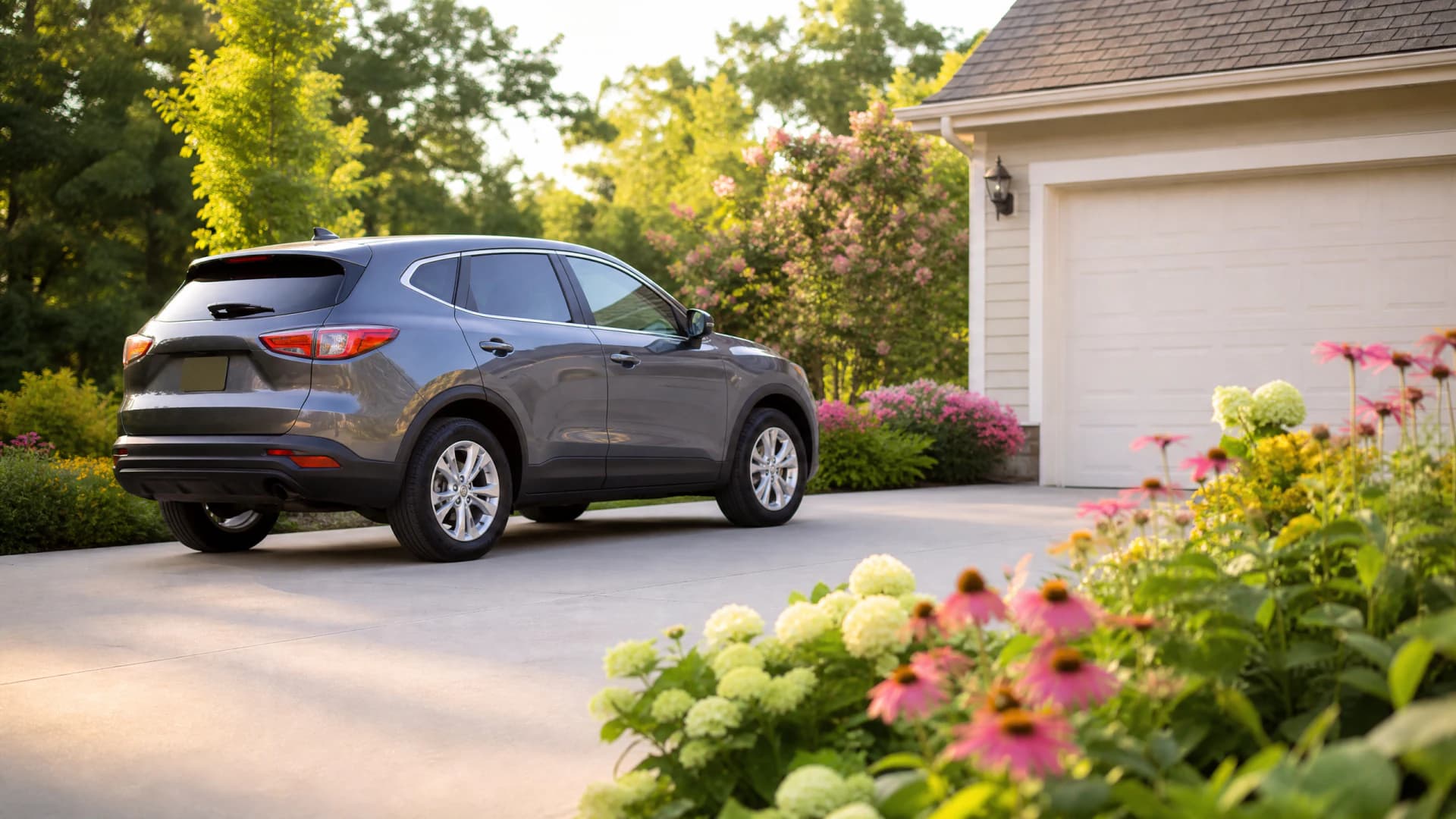
Comprehensive coverage rates in coastal Florida reflect higher hurricane, flooding, and theft exposure than inland Massachusetts. Naples and Marco Island sit in flood zones with annual hurricane risk, driving comprehensive premiums 30-50% higher than comparable Boston suburbs for vehicles valued above $40,000.
Specialty riders for classic cars, modified vehicles, or agreed-value policies often carry state-specific underwriting restrictions. A Massachusetts agreed-value policy covering a restored vehicle at $55,000 may not transfer to Florida at the same valuation, or the Florida carrier may require additional inspection, storage, and usage restrictions that invalidate your coverage intent.
Carriers writing high-value auto policies in Massachusetts include safety device credits and multi-policy bundling that Florida subsidiaries do not offer at equivalent rates. A driver bundling home and auto in Massachusetts with Liberty Mutual may find the Florida bundle costs $600-$900 more annually for the same vehicles and limits.
Your Massachusetts Address Qualifies You for Group or Affinity Rates Not Available in Florida
Union, alumni, professional association, and employer-sponsored group rates apply based on your primary residence state. AARP-affiliated rates through The Hartford, union member programs through Liberty Mutual, and alumni association rates through several regional carriers are priced and underwritten at the state level.
Massachusetts group programs for seniors frequently include rate caps, guaranteed renewal provisions, and claims-handling preferences that Florida policies from the same carrier do not extend. A driver paying $105/mo through a Massachusetts-based AARP program might pay $145/mo for the equivalent Florida AARP policy due to different state rate filings and loss ratios.
Verify group eligibility requirements before switching states. Most programs define eligibility by the member's primary residence, not mailing address or property ownership. Changing your legal residence to Florida terminates your access to Massachusetts group rates even if you maintain property there.

Get Covered in Both of Your Home States
Compare Snowbird Auto Insurance Rates
You Drive a Leased Vehicle with Massachusetts-Specific Gap or Lease Protection Coverage
Lease agreements and gap coverage policies are underwritten with state-specific total loss valuation formulas and sales tax treatment. Massachusetts applies 6.25% sales tax to lease payments; Florida applies 6% state sales tax plus county surtax ranging from 0.5% to 2.5%, with Collier County at 1.5% total.
Gap insurance covering the difference between actual cash value and lease payoff at total loss uses state-specific depreciation schedules and tax calculations. A gap policy issued in Massachusetts may not cover the Florida tax differential or apply Florida's accelerated coastal depreciation for weather-exposed vehicles, leaving you underinsured by $1,500-$3,000 on a $35,000 lease.
Lease agreements requiring specific liability limits or comprehensive deductibles are written to satisfy Massachusetts Registry of Motor Vehicles standards, not Florida Highway Safety requirements. Switching registration mid-lease without lessor approval can trigger default provisions or force-placed insurance at 2-3 times your negotiated rate.

Your Adult Children or Grandchildren Are Listed Drivers on Your Massachusetts Policy
Multi-driver household policies price each listed driver based on the state's rating territory and that driver's primary garaging location. If your adult child lives in Massachusetts and is listed on your policy as an occasional driver, switching your policy to Florida removes their coverage in Massachusetts or forces them onto a separate policy at significantly higher rates.
Massachusetts allows parents to exclude household drivers by name if those drivers carry their own policies. Florida requires all household-resident drivers to be either listed or formally excluded with signed documentation, and excludes non-resident drivers from coverage for more than 30 consecutive days per year.
A grandparent-owned vehicle driven occasionally by a Massachusetts-resident grandchild loses coverage in Massachusetts when the policy converts to Florida, even if the vehicle remains registered in Massachusetts. This creates an uninsured driver situation that most families discover only after a claim denial.
You're Subject to Massachusetts Safe Driver Insurance Plan Surcharges That Reset in Three Years
Massachusetts applies surcharges for at-fault accidents and traffic violations using a point system that expires after six years, with points reducing annually. A driver two years into a three-year surcharge period who switches to Florida loses the Massachusetts expiration timeline and enters Florida's underwriting system, which looks back five years for accidents and three years for violations without annual step-down reductions.
Florida carriers apply accident surcharges as percentage multipliers to base rates rather than fixed-dollar amounts. A Massachusetts driver paying a $200/year surcharge for a minor at-fault accident might face a 20-25% rate increase in Florida, equating to $300-$450/year on a $1,500 annual premium.
Wait until your Massachusetts surcharge expires before considering a state switch. The rate reset in Massachusetts at surcharge expiration often produces a lower premium than switching to Florida mid-surcharge period, even accounting for potential Florida base rate advantages.
Frequently Asked Questions
Can I keep my Massachusetts auto insurance if I own a home in Florida?
Yes, as long as you spend fewer than 183 days per year in Florida and maintain a Massachusetts residence where you garage your vehicle when not in Florida. Property ownership does not determine insurance residency — time spent in each state does. Document your days in each state through utility bills, credit card statements, and travel records.
Will my accident forgiveness transfer from Massachusetts to Florida if I switch my policy?
No. Accident forgiveness and long-tenure loyalty discounts are state-specific and do not transfer when you change your policy state. You will enter Florida's underwriting system with your full claims history visible, and prior forgiven accidents may be surcharged under Florida rating rules.
Do Florida insurance rates go up after age 70 for clean-driving seniors?
Yes, most Florida carriers apply age-based rate increases starting at age 70, with typical increases of 15-25% between ages 70 and 75. Massachusetts prohibits age-based rate increases after 65 for drivers without at-fault accidents in the prior three years, making it often cheaper for clean-record seniors to remain registered there.
What happens to my lease gap coverage if I register my car in Florida instead of Massachusetts?
Gap coverage issued in Massachusetts uses Massachusetts-specific depreciation schedules and sales tax calculations. Florida has different tax rates and coastal depreciation tables, which may leave you underinsured by $1,500-$3,000 at total loss. Contact your lessor and gap insurer before changing registration to confirm continued coverage.
Related Articles

Boston Retirees Moving to Naples: Hidden Insurance Costs
4/26/2026

Boston to Naples FL: Snowbird Insurance Costs & Rules
4/26/2026

When NOT to Switch from MA to FL Registration
4/26/2026

MA to Naples FL Insurance at 75-85 | Snowbird Rules
4/26/2026

Boston to Naples FL: Insurance Steps Before Selling
4/26/2026

Switching Auto Insurance From MA to FL Mid-Season
5/19/2026