
When NOT to Move from Traverse City to Naples: The Insurance Edge Cases
Free to compare
Your Registration Trigger Date and Your Rate Change Date Are Not the Same
Michigan law allows you to maintain Michigan registration until you spend more than 183 consecutive days in Florida during a calendar year. Your insurance carrier re-rates your policy the moment you tell them your vehicle is garaged in Naples or Marco Island for any extended period — typically defined as 90+ days. This creates a 90-day window where your rates reflect Florida garaging but your registration remains Michigan-legal.
The rate change happens because Florida is a no-fault state with higher medical coverage requirements and significantly higher uninsured motorist exposure than Michigan. Carriers price the garaging state, not the registration state. A 70-year-old driver moving a 2018 sedan from Traverse City to Naples sees average rate increases of $600–$900 annually once the Florida address appears on the policy, even if Michigan plates stay on the vehicle.
If you're splitting time unevenly — say, 120 days in Naples and the rest in Traverse City — you remain Michigan-registered but pay Florida-influenced rates for the entire policy term. Most carriers do not prorate by actual days in each state. The garaging address you provide at renewal sets the rate for the full six or twelve months.

When Keeping Your Michigan Address Becomes a Coverage Problem
Some snowbirds attempt to avoid the rate increase by keeping their Michigan address on file and not reporting the Naples stay. This works until you file a claim while the vehicle is in Florida. Carriers investigate garaging location during claims processing, and if your vehicle is damaged or stolen in Naples but your policy lists only a Traverse City address, the claim can be denied for material misrepresentation.
Michigan requires personal injury protection coverage. Florida requires personal injury protection coverage. The two systems are not identical, and a Michigan-only policy may not satisfy Florida's statutory minimums if you're involved in an accident in Lee or Collier County. If law enforcement requests proof of insurance and your policy does not reflect Florida garaging, you can be cited even if your Michigan coverage is valid.
The safe approach: notify your carrier of both addresses and accept the rate adjustment. The risky approach: maintain only the Michigan address and hope no claims arise while you're in Florida. The consequence of the risky approach is claim denial and potential policy rescission, which makes future coverage significantly more expensive across all carriers.

If Your Florida Address Is Your Adult Child's Home
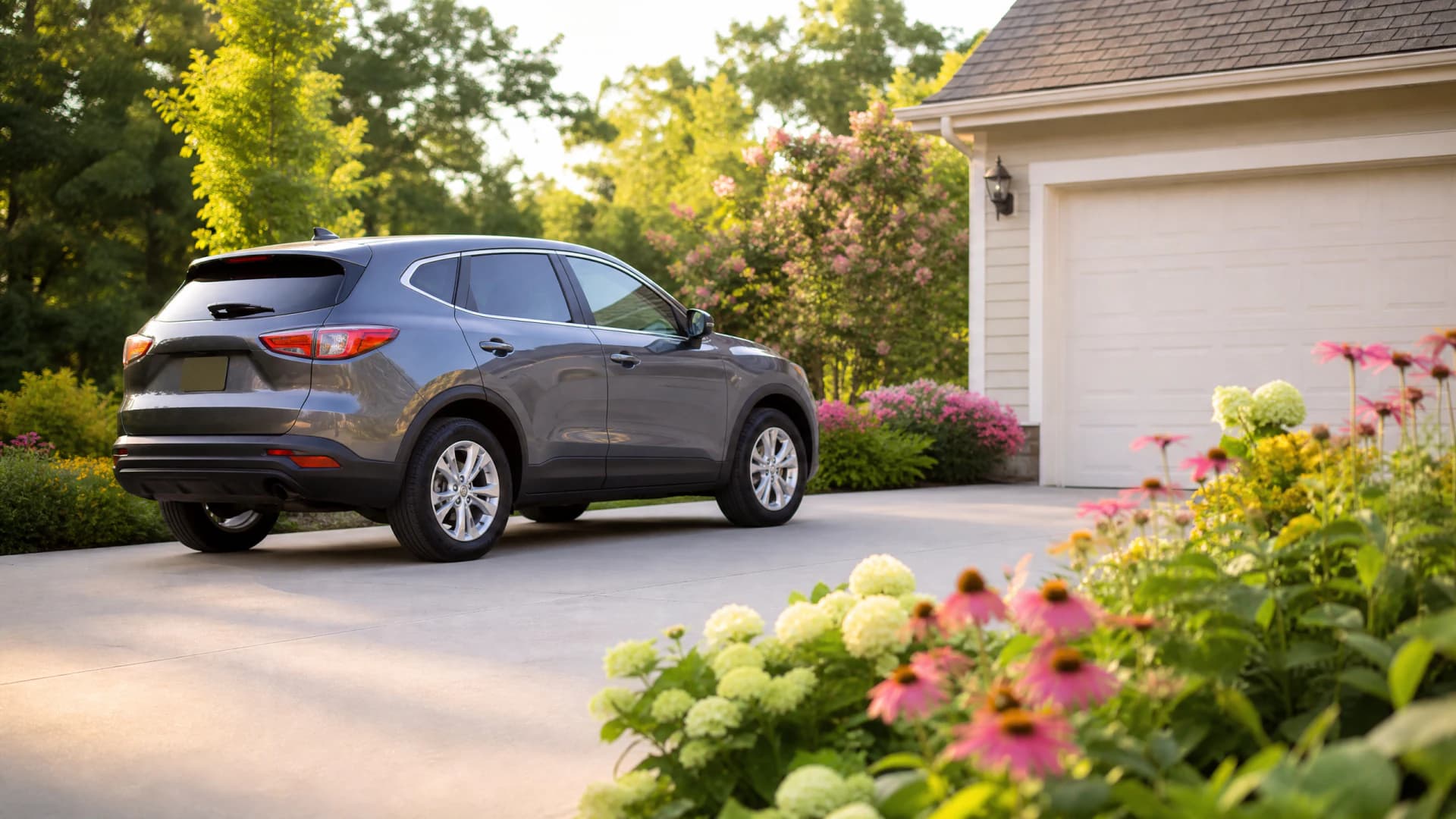
Many snowbirds stay with adult children in Naples or Marco Island rather than owning property. This creates ambiguity around garaging address. If your vehicle is parked at your child's residence for four months each winter, that residence is the garaging location for insurance purposes, regardless of whether you own the property.
Your carrier will ask for the Florida address where the vehicle is stored overnight. Providing your child's address triggers Florida rating. Not providing it and later filing a claim from that address triggers the misrepresentation issue described above. Ownership of the property is irrelevant to garaging address determination.
Some carriers allow you to list two garaging addresses and assign a primary based on the majority of the year. Others require you to update your garaging address each time you relocate seasonally, which means notifying the carrier twice per year and potentially triggering two policy adjustments annually. Confirm your carrier's specific multi-address process before your first Naples stay. GEICO, State Farm, and Progressive each handle this differently, and the wrong assumption costs you either money or coverage.
When the Move Makes Sense Despite Higher Rates
Florida rates are higher, but Michigan's unique no-fault system historically produced some of the highest auto insurance costs in the country until recent reforms. If you're currently paying $2,400–$3,000 annually in Traverse City, a move to Naples may increase your premium to $2,800–$3,600, but the percentage increase is smaller than it appears. Drivers leaving states with lower baseline rates see steeper percentage jumps.
Florida offers several senior-specific discount programs that Michigan does not mandate. Mature driver course discounts, low-mileage discounts, and retired-driver discounts can offset 10–20% of the base premium if you qualify and request them. These discounts are not automatically applied — you must ask, provide proof of course completion, and verify mileage annually.
If you're reducing your total annual mileage by moving to Naples and no longer commuting, the mileage reduction can justify the garaging location increase. A Traverse City driver logging 12,000 miles annually who drops to 6,000 miles in Naples may see total cost remain flat or decrease slightly, depending on carrier.

Get Covered in Both of Your Home States
Compare Snowbird Auto Insurance Rates
The Registration Decision: Michigan, Florida, or Both
You are required to register in Florida once you meet the 183-consecutive-day threshold in a calendar year. If you stay 180 days in Naples and return to Traverse City, you remain a Michigan registrant. If you stay 185 days, you must register in Florida within 10 days of meeting that threshold or face penalties.
Florida registration requires a Florida driver's license, proof of Florida residency (lease, deed, or utility bill), and surrender of your Michigan plates. Michigan registration requires a Michigan address and Michigan insurance coverage that meets Michigan's statutory minimums. You cannot maintain active registration in both states for the same vehicle simultaneously.
Many snowbirds assume they can keep Michigan plates and simply drive in Florida without issue. This works only if you stay under the 183-day threshold and your insurance policy correctly lists Florida as a garaging location. If you exceed 183 days and are stopped by Florida law enforcement with Michigan plates, you can be cited for failure to register, and your Michigan insurance may not satisfy Florida's proof-of-insurance requirements during the traffic stop.

When to Stay Michigan-Registered and Just Update Insurance
If your pattern is 90–150 days in Naples and the remainder in Traverse City, Michigan registration remains correct and legal. Update your insurance policy to reflect both garaging locations, accept the rate adjustment, and keep your Michigan plates. This avoids the administrative burden of switching registration twice per year or maintaining Florida residency documents.
Michigan's recent no-fault reforms reduced required personal injury protection levels, which lowered premiums for many drivers. If you registered in Michigan after July 2020 and selected a lower PIP tier, switching to Florida registration means losing that option and accepting Florida's $10,000 minimum PIP requirement. For some drivers, this negates the benefit of Florida's otherwise lower liability costs.
If you own property in both states and genuinely split time close to evenly, Michigan registration with dual-garaging insurance is the simpler structure. Florida registration makes sense only if you exceed the 183-day threshold or plan to establish Florida as your permanent domicile for tax or estate planning purposes unrelated to insurance.
What Happens If You Get This Wrong
The most common failure mode: a snowbird maintains Michigan registration and a Michigan-only insurance policy, spends four months in Naples, and files a comprehensive claim after their vehicle is damaged in a parking lot in Marco Island. The carrier investigates, discovers the vehicle was garaged in Florida for an extended period, denies the claim for garaging location misrepresentation, and cancels the policy retroactive to the last renewal date.
Cancellation for misrepresentation appears on your insurance record and follows you to the next carrier. You will be quoted as a high-risk applicant, and your rates will increase 30–60% above standard pricing for the next three to five years. The savings you thought you captured by avoiding the Florida rate adjustment cost you multiples of that amount in post-cancellation surcharges.
The second failure mode: a snowbird registers in Florida to establish residency but does not update their insurance garaging address because they assume registration and insurance are synchronized. They file a claim in Michigan during a summer visit, and the carrier discovers the vehicle is Florida-registered but the policy lists only Michigan garaging. The claim is delayed, the policy is re-rated retroactively, and the policyholder owes back-premium plus the deductible on a claim that should have been straightforward.
Frequently Asked Questions
Do I need to tell my insurance company every time I drive to Florida for the winter?
You must notify your carrier of any garaging location where your vehicle is stored for 90+ consecutive days. Most carriers allow you to list both a primary and seasonal address on your policy, which avoids the need to call twice per year. If you do not report the Florida garaging location and file a claim while in Naples or Marco Island, the claim can be denied for material misrepresentation of garaging address.
Can I keep my Michigan license and registration if I stay in Florida for five months?
Yes, as long as you do not exceed 183 consecutive days in Florida during a calendar year. Michigan allows you to maintain registration until you meet Florida's residency threshold. Your insurance carrier will still re-rate your policy based on the Florida garaging location, but your registration and license remain Michigan-valid.
Will my rates go down if I tell my carrier I'm only driving 6,000 miles per year in Florida?
Mileage reduction can offset part of the rate increase caused by Florida garaging, but it does not eliminate it. A low-mileage discount typically reduces your premium by 5–15%, while moving from Michigan to Florida garaging increases it by 15–35% depending on your age, vehicle, and coverage levels. The net result is still usually an increase, but smaller than it would be without the mileage adjustment.
What happens if I get into an accident in Florida but my policy lists only my Michigan address?
Your carrier will investigate where your vehicle was garaged during the policy term. If they determine you were staying in Florida for extended periods but did not report it, they can deny the claim for garaging location misrepresentation and cancel your policy. You will then be quoted as a high-risk driver by future carriers, with rates 30–60% higher than standard pricing for three to five years.
Related Articles

Traverse City to Naples Move: Real Insurance Costs
4/26/2026

Traverse City to Naples Insurance: Rules at 75, 80, 85
4/26/2026

Traverse City to Naples Auto Coverage: Snowbird Guide
4/26/2026

Detroit to Naples FL Snowbird Insurance: Year-1 Guide
4/26/2026

Ann Arbor to Naples Insurance: Rules for Drivers 75+
4/26/2026

Michigan-Florida Snowbird Insurance Coverage Gaps
5/19/2026